

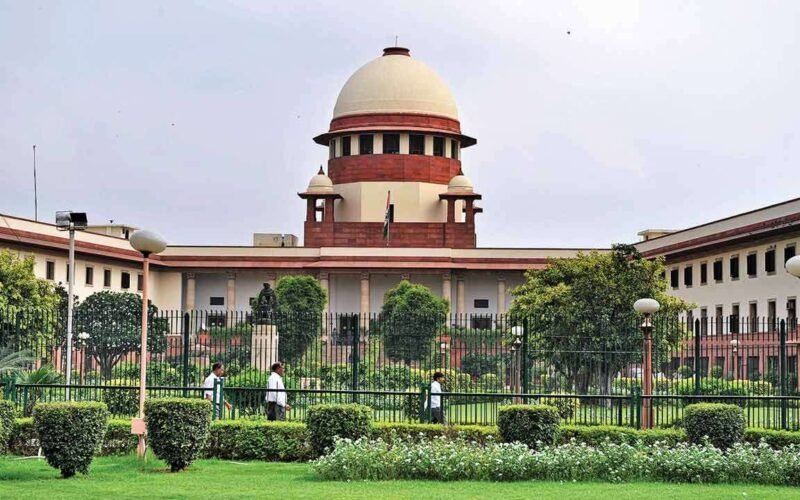
New Delhi (Gurpreet Singh): The Supreme Court of India ruled on Thursday that the Bar Council of India and state bar bodies possess no statutory jurisdiction to regulate or discipline law students. A Bench comprising Chief Justice of India Surya Kant, Justice Joymalya Bagchi, and Justice V Mohana affirmed that disciplinary authority over enrolled students rests solely with their respective educational institutions under their governing rules and regulations.
Delivering the judgment, the Bench clarified that the Advocates Act of 1961 does not confer express or implied powers upon the Bar Council of India or state councils to initiate disciplinary proceedings against individuals who have not yet been enrolled. The court highlighted that regulatory oversight by the BCI begins only after a candidate completes graduation and secures formal registration as an advocate. Consequently, the Bench declared the BCI’s directives from August 13 and related notices null and void for lacking legal authority.
The ruling arose from a petition filed by NALSAR alumni Mihira Sood and Abhishek Tiwari contesting directions issued by BCI Chairman Manan Kumar Mishra. The BCI had instructed state bodies to withhold the enrollment of 2026 graduates from the NALSAR University of Law in Hyderabad following student demonstrations regarding the Chief Justice’s planned attendance at their convocation. While the BCI revoked the notifications within hours due to public concern, the court took formal notice of the jurisdictional overreach, with Chief Justice Kant remarking that external interference in campus discourse was unwarranted.
Appearing for the students, Senior Advocate K Parameshwar argued that the episode directly affected foundational freedoms of speech and expression on university campuses. Though BCI representatives maintained that the immediate withdrawal of the letters rendered the issue moot, the court deemed it vital to establish clear statutory boundaries to protect student autonomy across academic institutions.
