

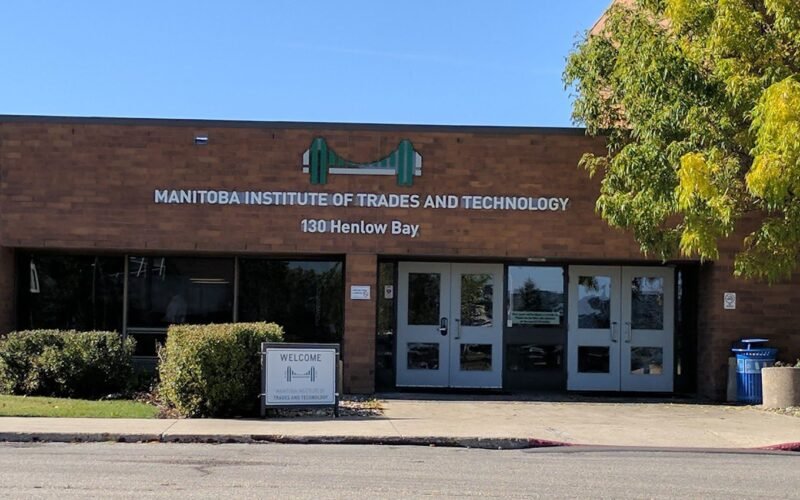
Winnipeg (Rajeev Sharma): The Manitoba Institute of Trades and Technology (MITT) is winding down its operations after a more than 55 per cent collapse in international enrolment, making it one of the clearest signs yet that Canada’s international student crackdown is hitting the country’s colleges where it hurts most their classrooms, revenues and long-term viability. Once a popular destination for international students seeking career-focused education in trades, technology, business and health care, MITT is now being forced to restructure and transfer selected programs to Red River College Polytech (RRC Polytech). The dramatic fall in international enrolment has made MITT’s existing financial model unsustainable, according to the institution.
MITT’s decline is a striking example of how quickly Canada’s international education landscape has changed. For years, colleges across the country expanded programs, facilities and recruitment operations to accommodate record numbers of international students. Students from India, particularly Punjab, became a major presence on Canadian campuses, viewing college education as a pathway to employment and, for many, a potential route toward permanent residence.
That boom has now been sharply reversed. Federal figures show that the number of new study-permit holders fell from approximately 293,000 in 2024 to about 115,000 in 2025, a decline of roughly 61 per cent. Ottawa has further tightened international student admissions and has set a target of 155,000 new international student arrivals for 2026, as part of its broader effort to reduce temporary-resident numbers and ease pressure on housing and public services.
The impact is no longer confined to immigration statistics. MITT is now paying the price. The institution’s international enrolment has fallen by more than half, forcing it to wind down its operations and hand over a number of its programs to RRC Polytech.
Beginning in Fall 2026, MITT and RRC Polytech will operate collaboratively at the South Winnipeg Campus. MITT will continue teaching its existing students so they can complete their programs, while RRC Polytech will accept new students into programs transferred to the polytechnic. Current students have been assured that the transition will not erase their academic credentials. Those who successfully complete their existing MITT programs will receive MITT credentials. RRC Polytech is taking over selected programs following an academic review, providing continuity for students pursuing career-oriented education.
The transformation will also change the physical face of MITT. Its Henlow Bay and Fultz Boulevard buildings are becoming part of RRC Polytech’s South Winnipeg Campus. For the Punjabi and Indian communities, the development carries a particularly strong message. MITT was among the institutions that offered international students practical programs designed to move them from classrooms into the workforce. For many young people arriving from India, that education-to-employment pathway was central to their Canadian plans.
Now, that pathway is being dramatically reshaped. MITT’s collapse is a warning that Canada’s international student policy has moved beyond controlling immigration numbers. It is now reshaping the country’s education industry itself. Colleges that once depended heavily on international tuition are being forced to cut back, restructure programs or rethink their entire business models.
The question facing Canada’s post secondary sector is no longer whether international student numbers will fall. They already have. The bigger question is how many more institutions will be forced to change or disappear, as the era of unlimited international student growth comes to an end.
For students watching from India and Punjab, the message is equally stark the Canada of open-ended international student expansion is gone, and the road to a Canadian education is becoming narrower, more competitive and far less predictable.
