

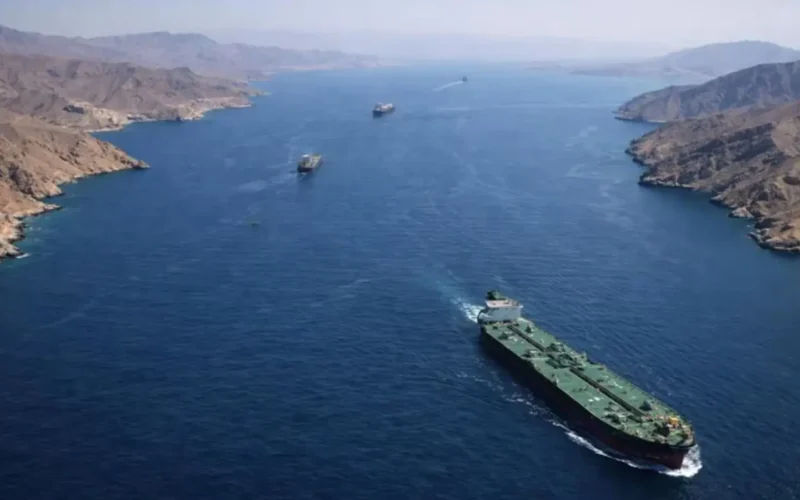
Tehran (Rajeev Sharma)— Iran’s Islamic Revolutionary Guard Corps (IRGC) has announced the indefinite closure of the strategic Strait of Hormuz, declaring that the vital maritime choke point will remain shut until the United States halts its military interventions in the West Asia region. The declaration follows severe military escalations over the weekend, including a series of intensive U.S. airstrikes hitting roughly 140 Iranian military sites. While Tehran asserts that no shipping traffic will be permitted through the waterway, U.S. Central Command (CENTCOM) has challenged the blockade, maintaining that naval assets continue to safeguard commercial transit lanes.
The administrative decision to halt maritime traffic was catalyzed by an exchange of hostilities, including an Iranian strike on a Cyprus-flagged container ship, the M/V GFS Galaxy, which left a crew member missing and disabled the vessel. In response, the IRGC Navy issued firm warnings against further international intervention, stating that any military actions using the closure as a pretext will draw targeted counterstrikes against foreign installations and regional host bases. Iranian officials explicitly placed responsibility for subsequent geopolitical fallout on the United States, Israel, and any regional partners accommodating Western forces.
The sudden breakdown unraveled a fragile, weeks-long ceasefire that diplomats had been trying to sustain. Prior to the announcement, Iranian Foreign Minister Seyyed Abbas Araqchi met with Omani officials in Muscat to negotiate safety protocols under the Islamabad Memorandum of Understanding. Simultaneously, negotiators from Qatar have traveled to Tehran in a bid to salvage diplomatic pathways and re-establish a framework for dialogue. The renewed instability in the strait—which handles a massive portion of the global oil and liquefied natural gas supply—has triggered immediate concerns across international energy markets, compounding inflationary pressures as shipping lines navigate the contested corridor.
