

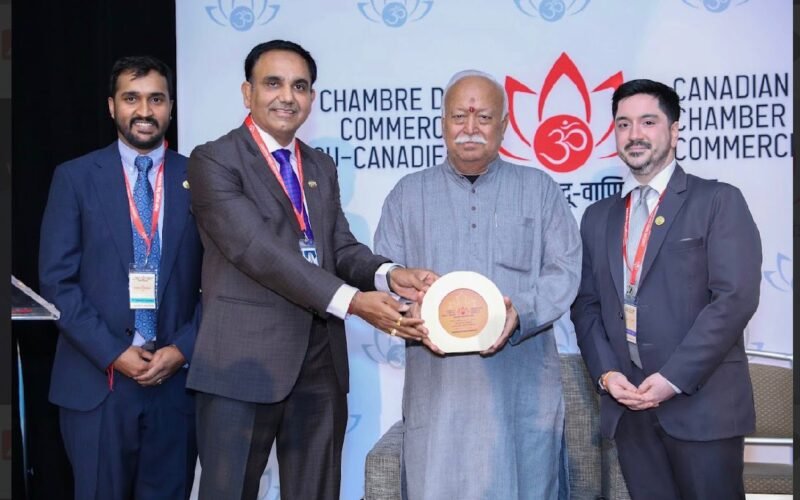
TORONTO (Rajeev Sharma): Economic activity should extend beyond profit-making and contribute to the well-being of society, Dr. Mohan Bhagwat , RSS chief, said at a business leaders’ dialogue organized by the Canadian Hindu Chamber of Commerce (CHCC).
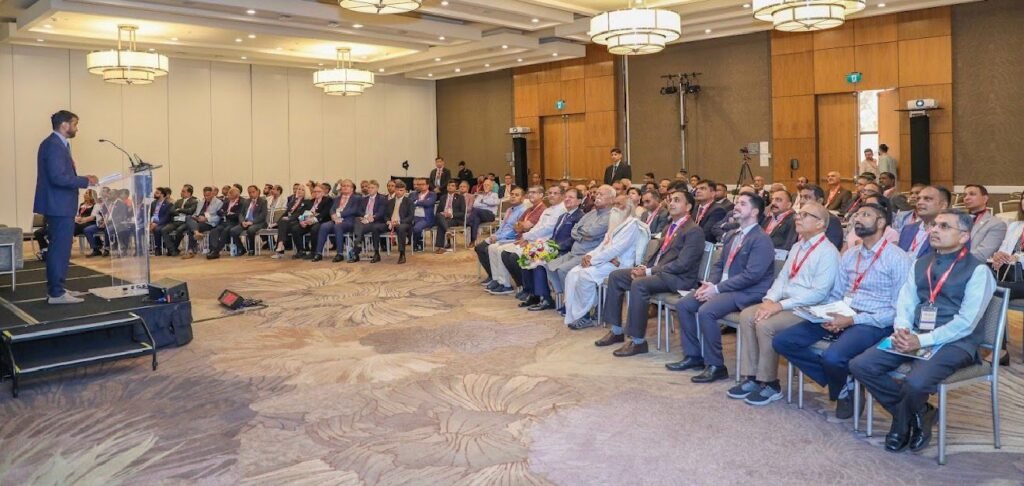
The event, titled “Dharma in Enterprise: A Business Leaders’ Dialogue,” focused on the relationship between economic growth, ethics, social responsibility and environmental sustainability. It was held under the theme “Where Culture Meets Commerce, Values Drive Business, and Growth Reflects Dharma.”
Dr. Mohan Bhagwat said business has an important role in creating wealth, but argued that wealth should also be managed and used in ways that benefit society. He described the Indian understanding of economics as involving not only the creation of assets but also their preservation and responsible use.
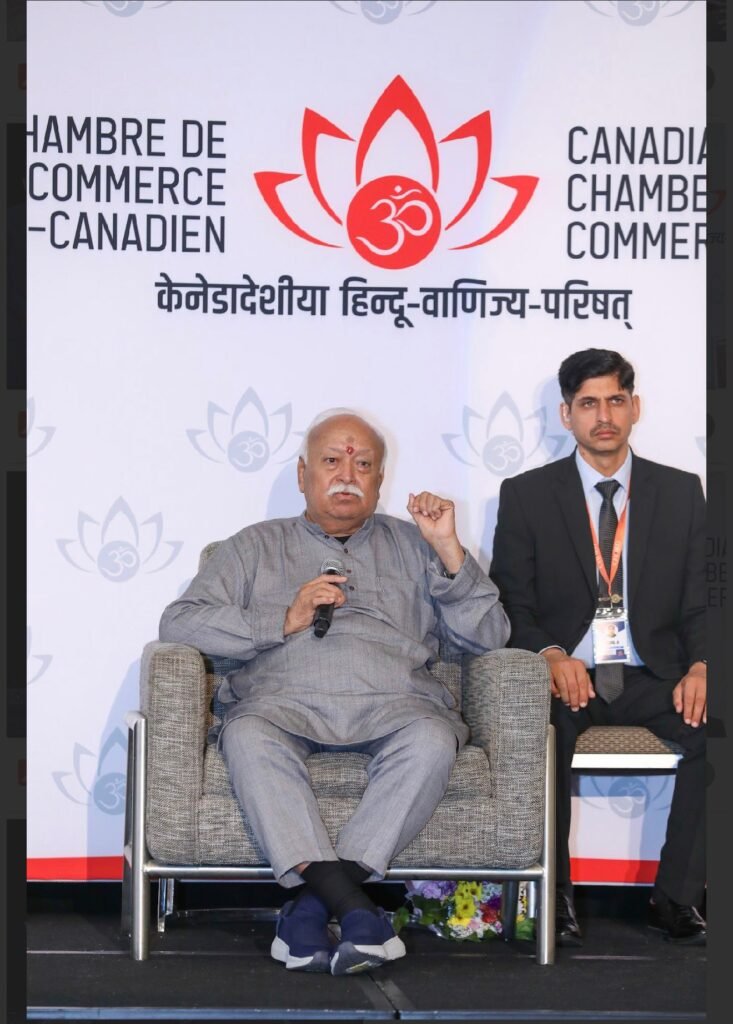
“Dharma is not religion. Dharma is a law of sustenance,” he said, presenting Dharma as a principle of balance and responsibility that helps sustain individuals, institutions and society.
He also distinguished between rights and duties, saying that a stable society requires people and institutions to fulfil their responsibilities rather than focusing exclusively on their individual rights.
Dr. Bhagwat said property, investment, trade and profit are necessary to support economic activity, but cautioned against treating profit as the sole measure of success. He said businesses respond to social needs by developing products and services, while society compensates them through economic participation. He characterized this relationship as one involving mutual responsibility rather than a purely transactional exchange.
He also spoke about managing income responsibly, including meeting personal needs, maintaining financial security, preparing for emergencies and contributing to the welfare of others. The important measure, he suggested, is not only how much a person earns but also how that wealth is used for the benefit of others.
Dr. Bhagwat linked economic development with ethical conduct and environmental responsibility, emphasizing that businesses should consider the wider effects of their decisions on society and the natural environment.
He referred to the traditional concept of “Yogakshema,” describing it as acquiring what is necessary and protecting what has been acquired—principles he presented as relevant to responsible economic planning and sustainable development. Agriculture, industry, trade and other forms of enterprise contribute to meeting human needs, he said, but people also have a responsibility to protect the broader environment of which they are a part.
Dr. Bhagwat described business as a form of social participation in which entrepreneurs create value for customers, employees, communities and the wider public, in addition to generating returns for themselves.
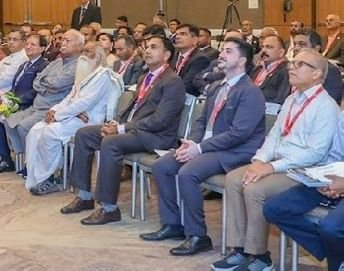
He also connected the discussion to the modern concept of Corporate Social Responsibility (CSR), saying that the principle of contributing to society has longstanding roots in Indian thought and practice. The CHCC-organized dialogue concluded with an interactive question-and-answer session involving business leaders and other participants. Discussions addressed economics, enterprise, leadership and the responsibilities of the business community.
The event reinforced the CHCC’s vision: “Where Culture Meets Commerce, Values Drive Business, and Growth Reflects Dharma,” providing a platform to explore how ethical principles can guide contemporary business practices, responsible leadership and sustainable economic growth.
