

Chandigarh (Balwinder SIngh) — The Haryana government has accelerated preparations for the procurement of Kharif pulses and oilseed crops, announcing that moong procurement will commence across 38 designated mandis on October 1. The state has set the Minimum Support Price (MSP) for moong at ₹8,780 per quintal, while sesame (til) has been fixed at ₹10,346 per quintal. Other key floor prices include ₹8,450 per quintal for arhar, ₹8,200 for urad, ₹7,517 for groundnut, and ₹5,708 for soybean.
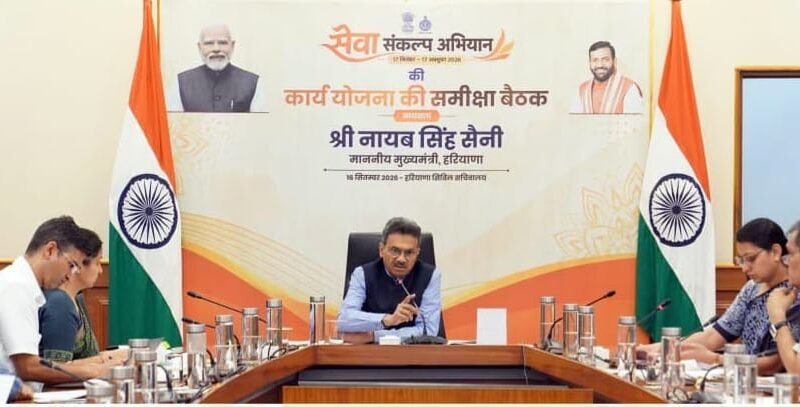
Reviewing procurement blueprints in Chandigarh, Chief Secretary Anurag Rastogi assessed crop yield estimates, market readiness, logistics, storage infrastructure, and procurement agency coordination. Total estimated production across the six Kharif pulse and oilseed commodities for the 2026–27 cycle is projected at 52,761 tonnes. Moong accounts for the largest share at 34,326 tonnes, followed by groundnut at 16,456 tonnes, sesame at 1,222 tonnes, arhar at 567 tonnes, urad at 164 tonnes, and soybean at 26 tonnes.
Acreage data indicates significant shifts in regional cropping patterns. Groundnut cultivation expanded substantially from 11,750 acres last season to 20,570 acres, while sesame area nearly doubled from 2,124 acres to 4,074 acres. Conversely, moong cultivation declined sharply from 1,47,650 acres to 85,815 acres.
According to Vijayendra Singh, Additional Chief Secretary of the Agriculture and Farmers Welfare Department, moong procurement will run from October 1 to November 15 across 38 mandis. Soybean procurement will take place across seven mandis from October 15 to November 30, followed by groundnut procurement from November 1 to December 31 in seven mandis. Purchases for arhar, urad, and sesame will begin on December 1 across 22, 10, and 27 mandis respectively.
Administrative directives have been issued to Hafed, the Haryana State Warehousing Corporation, NAFED, and NCCF to ensure adequate gunny bags, streamlined storage, and seamless operations. Under the Price Support Scheme (PSS), the state continues to authenticate farmers using biometric Point of Sale (POS) machines, a protocol maintained since the Rabi 2025–26 season to ensure transparency in procurement operations.
