

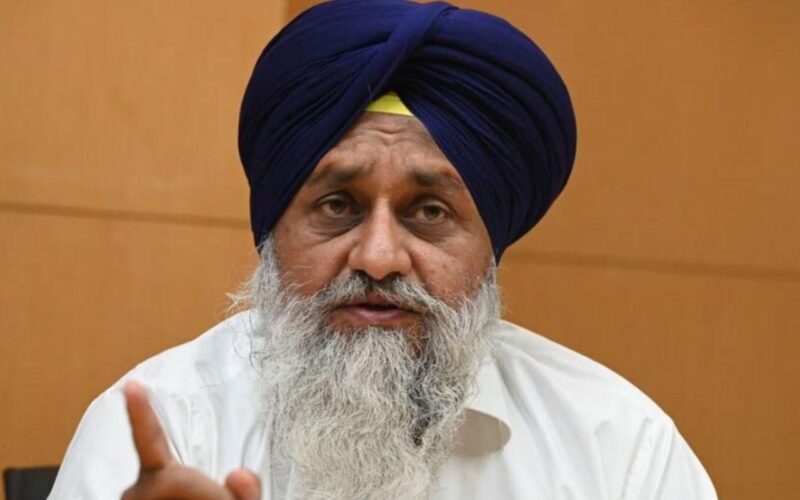
Chandigarh (Gurpreet Singh): The assault on Shiromani Akali Dal president Sukhbir Singh Badal at Nanded has opened up a wider political conversation in Punjab, with the incident bringing renewed attention to the strained relationship between the SAD leadership and sections of the Panthic electorate.
The attack took place days after Badal met Prime Minister Narendra Modi, adding political significance to an incident that has already triggered condemnation across party lines. While investigators will determine the circumstances and motive behind the assault, political observers are examining how the episode could influence the SAD’s efforts to rebuild its support base.
Badal’s past continues to shadow SAD
For the Akali Dal, the biggest challenge remains overcoming the political baggage accumulated during its previous tenure in government.
The 2015 Bargari sacrilege case and the subsequent police firing at Behbal Kalan and Kotkapura remain particularly sensitive issues among Sikh voters. Two protesters were killed in the firing, and the handling of the entire episode became a major source of anger against the then SAD government.
Sukhbir Badal was Punjab’s deputy chief minister and Home Minister at the time, while his father, Parkash Singh Badal, was the chief minister.
Another major controversy involved the 2015 pardon granted to Dera Sacha Sauda chief Gurmeet Ram Rahim by the Akal Takht. The decision generated widespread criticism and was eventually withdrawn. The episode contributed to growing allegations that political considerations were influencing Sikh religious institutions.
Panthic politics no longer a one-party contest
The SAD’s traditional position as the principal political representative of Panthic interests has also been challenged in recent years.
The emergence of the Akali Dal (Waris Punjab De) has given voters another political option, particularly those seeking a stronger Panthic agenda.
Political analyst Pramod Batish believes the Nanded incident could bring some of the old controversies back into political discourse. Any renewed focus on the sacrilege cases and the decisions taken during the previous SAD government could make the party’s task of reconnecting with its traditional electorate more difficult.
At the same time, Professor Dr KK Rattu believes the SAD still has the organisational network and political identity to remain a major force if it manages to consolidate the Panthic vote.
Modi meeting puts alliance question back in focus
Badal’s meeting with Narendra Modi has also fuelled speculation about whether the SAD and BJP could eventually revive their old alliance.
The two parties had been long-standing allies in Punjab before the relationship collapsed during the farmers’ agitation against the three farm laws. The SAD withdrew from the Union government in 2020 and subsequently ended its alliance with the BJP.
Any attempt to rebuild that partnership would therefore require the Akali leadership to balance electoral calculations with concerns among sections of its traditional support base.
Political analyst Pawandeep Sharma has noted that the earlier SAD-BJP governments had built their political pitch around Hindu-Sikh unity and development. However, the farm-law controversy and the sacrilege episodes remain part of the political memory of that period.
Akal Takht action remains a key issue
Sukhbir Badal’s confrontation with questions surrounding his past decisions reached another significant point in 2024 when the Akal Takht declared him Tankhaiya.
Badal accepted responsibility for mistakes associated with decisions taken during the SAD government’s tenure and subsequently carried out religious punishment prescribed by the Sikh clergy.
For the SAD, the episode was significant because it placed the party’s leadership under renewed scrutiny from the religious establishment at a time when it was already attempting to recover from electoral setbacks.
What the incident means for Punjab politics
The immediate political consequences of the attack will depend on how different parties and voter groups respond to it. The incident itself should not be assigned a political motive without evidence from the investigation.
Yet its timing has ensured that several unresolved questions surrounding the SAD have returned to public debate.
The party now faces a difficult balancing act: rebuild its credibility among Panthic voters, compete with emerging political alternatives and, at the same time, decide whether a closer relationship with the BJP fits its political strategy.
With Punjab’s next Assembly election approaching, the ability of the SAD to reclaim its traditional support base could prove crucial—and the controversy surrounding Sukhbir Badal remains one of the biggest hurdles in that effort.
