

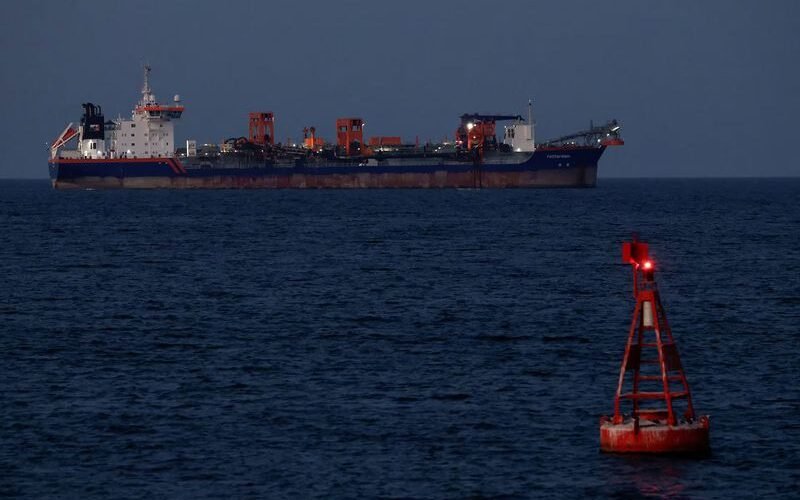
New Delhi (Gurpreet Singh): India formally summoned Iranian Ambassador Mohammad Fathali on Saturday, April 18, 2026, to lodge a “strong protest” after two Indian-flagged tankers were fired upon by Iranian naval forces. The Ministry of External Affairs (MEA) expressed deep concern over the safety of merchant shipping and seafarers following the unprovoked shooting incident in the strategically vital Strait of Hormuz. Foreign Secretary Vikram Misri met with the envoy in New Delhi, urging Tehran to immediately restore safe passage for India-bound vessels and to convey India’s serious objections to the highest levels of the Iranian government.
The incident involved two large crude oil tankers, the Jag Arnav and the Sanmar Herald, which were transiting the waterway north of Oman when they were intercepted by the Islamic Revolutionary Guard Corps (IRGC) Navy. According to maritime reports, the Sanmar Herald, which was carrying nearly 2 million barrels of Iraqi crude, came under direct fire after its initial clearance was suddenly revoked. Audio intercepts captured the crew’s distress calls as they were forced to retreat westward. While the Indian Navy confirmed there were no reported injuries among the crew, the attack has raised fresh alarms over maritime security during a period of extreme regional volatility.
The escalation comes despite a fragile 10-day ceasefire mediated by Pakistan between the United States and Iran, which was supposed to keep the Strait “completely open” for commercial traffic. Iranian authorities have defended their actions by claiming the need for “intense management” of the waterway in response to continued U.S. naval blockades. As the ceasefire is set to expire on Wednesday, April 22, international mediators are working frantically to prevent a collapse of the truce, while New Delhi remains on high alert to protect its critical energy supply lines in the Gulf.
