

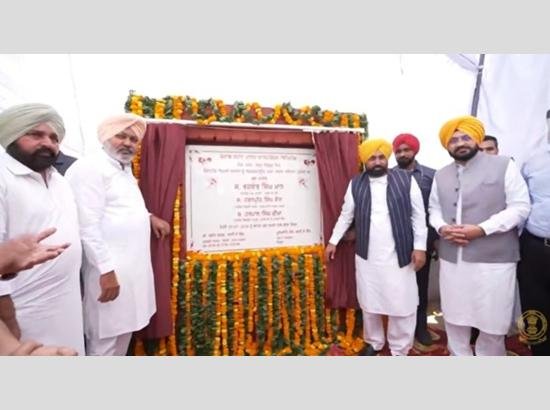
Gurpreet Singh :- In a major push to modernise Punjab’s rural power infrastructure, the state government has launched a pilot project to shift overhead electricity wires underground, aiming to improve safety, reliability, and efficiency in rural areas.
Chief Minister Bhagwant Mann inaugurated the initiative from his native village Sattoz in Sangrur district, marking the beginning of what officials are calling a “transformational” upgrade under the state’s broader “Roshni Punjab” initiative.
The project focuses on removing electricity poles and overhead transmission lines from agricultural fields and replacing them with underground cable systems. According to the government, the move is intended to reduce disruptions caused by storms, strong winds, and adverse weather conditions that often damage power infrastructure and interrupt electricity supply for days.
CM Mann said that underground cabling will ensure uninterrupted electricity supply even during extreme weather conditions. He added that the shift will also significantly reduce risks in farming areas, where loose or intersecting high-voltage wires sometimes create sparks that lead to fire incidents in standing crops.
The government has also highlighted safety concerns involving farm machinery and field operations, noting that overhead lines have been responsible for several accidents over the years. Officials believe the underground system will help eliminate such hazards while also reducing transmission losses and improving overall efficiency.
Under the pilot project, Sattoz village is being developed as Punjab’s first “pole-free model village.” As part of the plan, 384 electricity poles will be removed, and the entire upgrade is estimated to cost around ₹8 crore.
The infrastructure overhaul includes undergrounding approximately 7 km of high-tension lines and 95 km of low-tension distribution lines. Authorities said advanced drilling technology will be used to lay pipelines at a depth of about three feet, minimising surface disruption.
Even household connections, including service lines and meter boxes, will be integrated into the underground system as part of the comprehensive redesign.
Officials stated that once the pilot project is successfully implemented and evaluated in Sattoz, the model will be expanded in phases across Punjab to modernise rural power distribution and eliminate the long-standing risks associated with overhead electricity networks in agricultural areas.
