

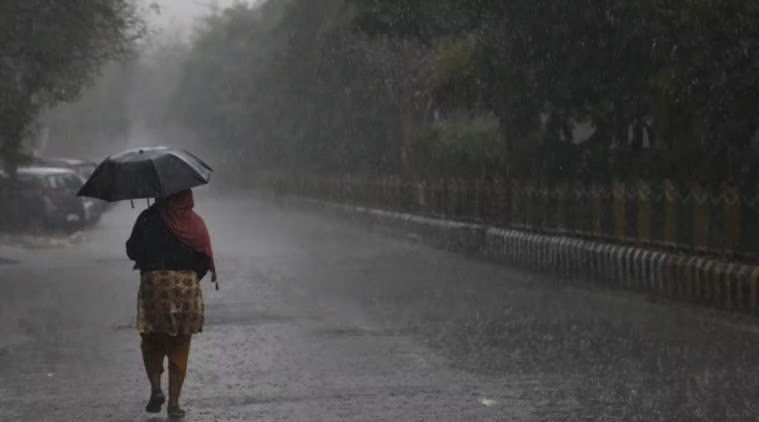
Chandigarh (Gurpreet Singh): A fresh spell of monsoon showers is expected to sweep across Punjab and Chandigarh, with the India Meteorological Department (IMD) warning of heavy rainfall in Pathankot, Gurdaspur and Hoshiarpur. The three districts, located along the Himachal Pradesh border, are likely to witness intense rain, while most other parts of the state are expected to receive light to moderate showers.
The weather office has forecast generally cloudy conditions over Chandigarh, with intermittent rain and thunderstorms likely during the day. Although recent showers have brought some relief, daytime temperatures have edged upward by around one degree, bringing them close to seasonal averages. Bathinda remained the hottest location in the state, recording a maximum temperature of 37°C.
A yellow alert has been issued for Punjab as thunderstorms and lightning are likely at several places. Districts including Amritsar, Tarn Taran, Jalandhar, Kapurthala, Ludhiana, Sangrur, Fatehgarh Sahib, Rupnagar, Patiala, Mohali and Shaheed Bhagat Singh Nagar (Nawanshahr) are expected to experience scattered rainfall. Similar weather conditions are also likely in Ferozepur, Fazilka, Faridkot, Muktsar, Moga, Bathinda, Barnala and Mansa.
Authorities have advised people to stay indoors during thunderstorms wherever possible and avoid taking shelter under trees or remaining in open fields due to the risk of lightning.
Meteorologists attribute the current weather pattern to the combined influence of an active monsoon trough over north India and a western disturbance affecting neighbouring Himachal Pradesh. These systems are expected to keep rainfall activity active across Punjab and Chandigarh over the next few days.
Despite the forecast of fresh showers, the state continues to report a 33 per cent deficit in monsoon rainfall compared to the normal seasonal average. Chandigarh, however, has performed better, recording above-normal rainfall during July, helping reduce the rainfall gap in the city.
Meanwhile, persistent humidity and warm conditions have pushed electricity consumption higher across Punjab. Peak power demand touched 14,241 MW, with a significant portion of the requirement being met through the central grid and other external sources alongside the state’s own generation capacity.
Water levels in the Bhakra and Pong reservoirs have also witnessed a gradual rise following rainfall in Himachal Pradesh. However, officials confirmed that both dams remain well below their respective danger marks. They added that reservoir levels will largely depend on rainfall in the upper catchment areas and future water release decisions in the coming weeks.
