

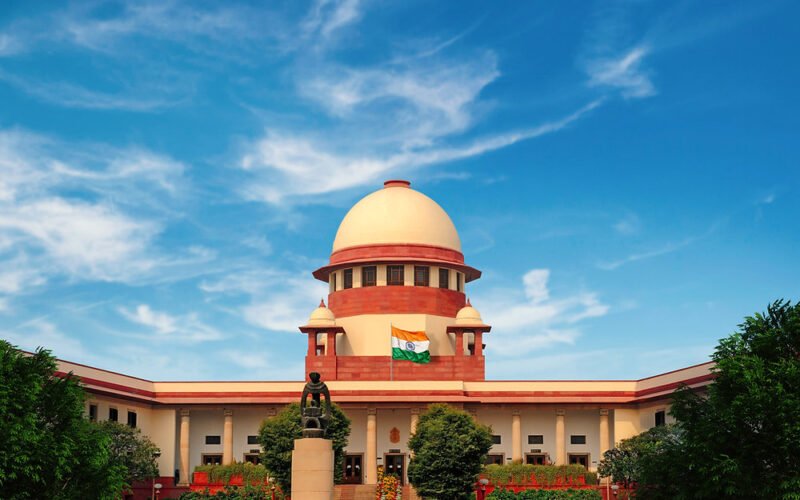
New Delhi (Gurpreet Singh): In a significant move aimed at tackling case pendency and ensuring the timely delivery of justice, President Droupadi Murmu has promulgated an ordinance to expand the sanctioned strength of the Supreme Court of India. The Supreme Court (Number of Judges) Amendment Ordinance, 2026, officially raises the number of positions from 33 to 37, excluding the Chief Justice of India. With this legislative update to Section 2 of the Supreme Court (Number of Judges) Act, 1956, the country’s highest court will now operate with a maximum capacity of 38 judges, including the Chief Justice of India. The Union Cabinet had originally approved this expansion during a meeting on May 5, ultimately utilizing the ordinance route to implement the change immediately because Parliament is not currently in session.
This judicial expansion arrives at a critical juncture for the country’s legal system, as total case pendency in the Supreme Court reached a record high of 93,143 cases as of March 31, 2026. The current working strength of the court stands at 32 judges, including the Chief Justice of India, with four additional judges scheduled to retire later this year. Following the newly authorized framework, the Supreme Court Collegium, led by Chief Justice of India Surya Kant, is anticipated to begin recommending candidates to fill these immediate vacancies and optimize court operations.
The current restructuring marks the first change to the composition of the bench since 2019, when the sanctioned strength was altered from 31 to 33 judges, excluding the Chief Justice of India. According to Article 124 (1) of the Constitution of India, the Supreme Court originally began its institutional journey in 1950 with a bench of only eight judges, including the Chief Justice of India, leaving further expansions to parliamentary legislation. To manage an escalating workload over the decades, the number of sitting judges was progressively elevated to 11 in 1956, 14 in 1960, and 18 in 1977.
Subsequent legislative amendments continued this upward trajectory, expanding the bench to 26 judges in 1986, and later to 31 in 2009, before settling at the previous threshold of 34 in 2019. Government authorities maintained that adding four new positions to the bench will significantly assist the Supreme Court in functioning with greater efficiency and effectiveness. By reinforcing the judiciary, the administration intends to accelerate legal proceedings, reduce systemic pressure on sitting judges, and better prioritize the constitutional right to speedy arbitration for citizens.
