

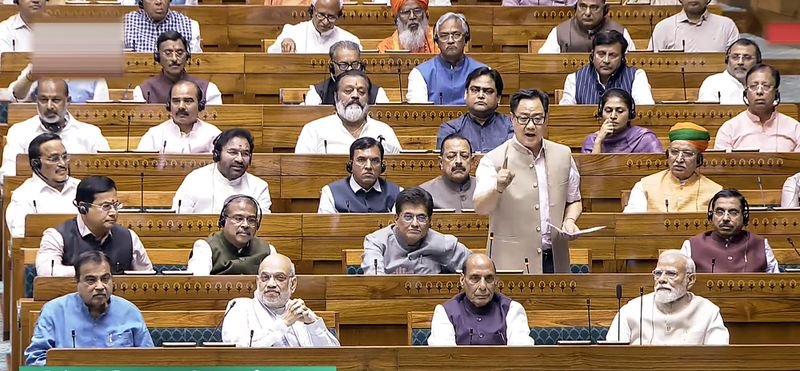
New Delhi (Gurpreet Singh): In a high-stakes legislative showdown, the Constitution (131st Amendment) Bill, 2026 was defeated in the Lok Sabha on Friday, April 17, 2026. Despite an emotional appeal from Prime Minister Narendra Modi and a 21-hour marathon debate, the Bill failed to secure the mandatory two-thirds majority required for a constitutional amendment. While 298 members voted in favour, 230 voted against it, leaving the government 54 votes short of the 352-vote threshold.
The Bill’s defeat effectively stalls the government’s plan to “fast-track” 33% women’s reservation for the 2029 election cycle by expanding the Lok Sabha to 850 seats based on the 2011 Census data. Consequently, the original timeline for women’s quota remains tethered to the completion of the 2026 Census and the subsequent delimitation exercise, as mandated by the Nari Shakti Vandan Adhiniyam (106th Amendment Act, 2023), which was ironically notified just late last night.
What happens next?
- 2026 Census Trigger: With the advancement attempt defeated, the delimitation process will now wait for the first census conducted after 2026. The freeze on seat allocation, established by the 84th Amendment (2001), will expire this year, but the redistricting will rely on fresh population data rather than the 2011 figures proposed by the government.
- Shift in Electoral Map: Sources suggest this delay could significantly disadvantage the Opposition and Southern states. Since the 2011 Census, population growth in the South has stabilized further compared to the North. Delimitation based on the 2026 Census is projected to lead to a sharper reduction in the proportional seat share for Southern states like Tamil Nadu, Kerala, and Andhra Pradesh.
- South’s “Best Deal” Lost: Government insiders noted that the defeated proposal to increase each state’s seats by 50% was a “protective buffer.” Without this specific amendment, the standard population-based delimitation could see the South losing actual seats to Northern states with higher population densities, rather than just seeing a relative increase.
Political Fallout
Leader of Opposition Rahul Gandhi called the Bill an “anti-national act” and an attempt to “alter the country’s electoral map” by diminishing the voice of Southern and smaller states. Conversely, Home Minister Amit Shah argued during the debate that the proposed expansion was the only way to balance voter-to-MP ratios without penalizing states that successfully managed population growth. For now, the implementation of women’s reservation is likely pushed into the mid-2030s, as the 2026 Census and the following Delimitation Commission report are expected to take several years to finalize.
