

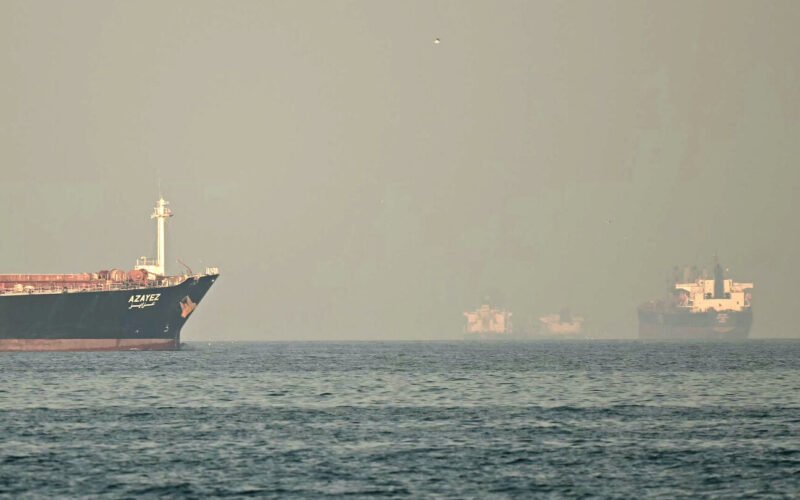
Tehran (Rajeev Sharma): Global energy markets experienced a historic shift on Friday, April 17, 2026, after Iran’s Foreign Minister Abbas Araghchi announced that the Strait of Hormuz is now “completely open” for all commercial transit. The decision is tied to the 10-day ceasefire between Israel and Lebanon, which officially began yesterday at 5 p.m. ET. The news sparked an immediate 13% plunge in oil prices, with Brent crude falling to $86.30 per barrel and WTI dropping to $79.20. U.S. stock markets responded with a massive rally; the Dow Jones Industrial Average surged over 1,000 points, recouping nearly all losses incurred since the start of hostilities with Iran earlier this year.
Despite the reopening of the vital waterway, U.S. President Donald Trump clarified that the naval blockade of Iranian ports will remain “fully in effect” until a final diplomatic deal is 100% complete. Trump noted on Truth Social that while commercial passage is unimpeded, the restrictions aimed at limiting Iran’s oil export revenues will continue until the Uranium stockpile negotiations, currently hosted in Washington and facilitated by U.S. Secretary of State Marco Rubio, are finalized. Industry strategists have expressed cautious optimism, noting that while the opening of the Strait provides short-term relief, long-term stability still hinges on the outcome of the ceasefire extension talks.
Key Global Impacts
- Energy Market: Brent crude saw its largest single-day drop in recent years, falling 13% to reach its lowest level since early March.
- Economic Relief: The Dow’s 1,032-point surge reflects market relief as the risk of a prolonged global energy shock begins to subside.
- Maritime Security: Crews passing through the Strait have been advised to maintain coordination with the IRGC and international naval forces due to lingering concerns over anti-ship mines from previous escalations.
Update: Iranian Tankers off Indian Coast
In a related development, two massive tankers carrying Iranian crude, the Felicity and Jaya, have anchored near the Gujarat and Odisha coasts, respectively. These are the first Iranian oil deliveries to India in seven years, made possible by a temporary U.S. sanctions waiver intended to stabilize global supply. However, a third “unannounced” tanker, the Derya, currently sits off the Gujarat coast without a buyer, as Indian refiners are hesitant to accept cargo loaded after the U.S. waiver’s March 20 cut-off date to avoid potential secondary sanctions.
