

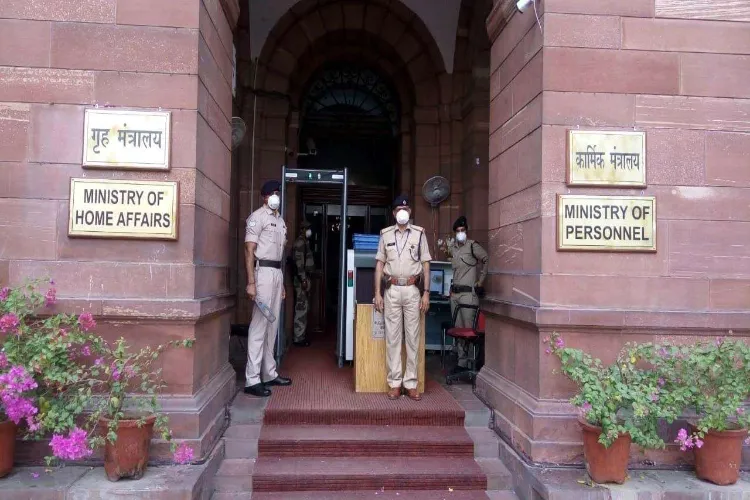
New Delhi (Gurpreet Singh): The Union Ministry of Home Affairs (MHA) has sought detailed reports from the Punjab government on three cases involving the killing of anti-drug activist Parvinder Singh alias Jhota, the death of Bikramjit Singh in Gurdaspur district and the reported suicide of Gulzar Singh. In its communications to the Punjab Chief Secretary, the ministry flagged public distress and potential law-and-order implications linked to the incidents.
The requests come amid renewed scrutiny of Punjab’s response to drug trafficking and substance abuse following Jhota’s killing in Mansa on October 13, 2026, which triggered protests across the state.
The MHA has also asked the state government to provide details of the action taken to strengthen its anti-narcotics framework and implement measures outlined in the Centre’s Vision Document on Narcotics Control.
Why Has The MHA Sought Reports From Punjab?
In its communication concerning Jhota’s killing, the MHA described him as a person known for campaigning against the alleged widespread sale and abuse of narcotic and psychotropic drugs in Punjab.
The ministry asked the state government to submit a comprehensive factual report on the October 13 incident and the steps taken by the authorities in the case. The letter also referred to protests following the killing.
Jhota’s death has intensified public concern over the drug problem and the safety of those who campaign against alleged drug-related activities. The case has also become a focus of political debate over law and order in Punjab.
The MHA’s request seeks information from the state government rather than announcing any finding on responsibility for the killing or the wider allegations surrounding drug trafficking.
What Did The MHA Say About Bikramjit Singh’s Death?
In a separate communication, the ministry sought a detailed report on an attack in Mari Panwan village in Gurdaspur district, under the Sri Hargobindpur area of Batala.
The incident involved Bikramjit Singh and two others, Nishan Singh and Gurmukh Singh. Bikramjit died following the attack, while the other two were reported to have sustained critical injuries.
The MHA noted allegations that the assault was connected to narcotic drugs and asked the Punjab government to provide details of the incident, citing its potential implications for law and order.
However, the alleged drug-related motive remains contested. Subsequent reporting has cited the police position that the violence arose from a dispute between two groups over a mobile phone. The circumstances and motive should therefore be treated as matters under investigation rather than established facts.
The ministry has sought the state government’s account of the incident and the action taken by the authorities.
Why Did The MHA Seek A Report On Gulzar Singh’s Suicide?
The third communication concerns Gulzar Singh, who reportedly died by suicide on September 8, 2026. According to allegations cited in the MHA letter, Gulzar had questioned the availability of synthetic drugs in his area and raised allegations against a minister in the Punjab government before his death.
The letter also referred to claims that Gulzar faced sustained harassment and pressure from the local village panchayat, which allegedly contributed to his decision to take his own life.
The MHA highlighted the public distress surrounding the matter and sought a detailed report from the Punjab government.
These allegations have not been presented in the letter as established findings. The circumstances surrounding Gulzar’s death, including the claims of harassment and the alleged connection with his concerns about drug availability, require careful examination by the relevant authorities.
Centre Seeks Details Of Punjab’s Anti-Narcotics Measures
Alongside the requests for reports on the three cases, the MHA has asked Punjab to provide details of action taken on the Centre’s Vision Document on Narcotics Control for 2026–2029.
The document outlines measures intended to strengthen the fight against drug trafficking and substance abuse. These include establishing or restructuring a dedicated Anti-Narcotics Task Force, conducting financial investigations in drug-related cases and undertaking outcome-oriented reviews through the Narco-Coordination Centre mechanism.
The ministry has also called for stronger prosecution, improved capacity to try offences under the Narcotic Drugs and Psychotropic Substances (NDPS) Act, the appointment of nodal officers and action against transnational drug networks.
The MHA’s communications place the three cases within the broader context of drug control and public order in Punjab. The reports sought from the state are expected to provide the Centre with details of the incidents, the steps taken by the authorities and progress on the anti-narcotics measures outlined in the vision document.
