

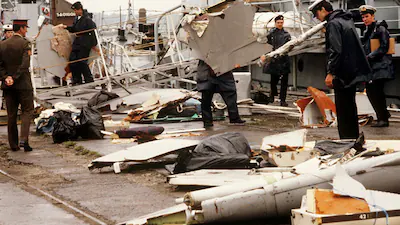
Chandigarh (Gurpreet Singh/Rajeev Sharma): More than four decades after Air India Flight 182 was destroyed by a bomb over the Atlantic, the investigation into the Kanishka bombing has become the subject of a fresh dispute between Canadian authorities and victims’ families.
Relatives of those killed in the June 23, 1985 attack say they were recently informed about the possibility of reducing the Royal Canadian Mounted Police (RCMP) task force investigating the case and placing the investigation in an inactive status.
The development has prompted strong opposition from families, who say the investigation should not be wound down without establishing whether all possible avenues for identifying those responsible have been exhausted.
The concerns emerged after a meeting with relatives of victims in Toronto on September 12. According to a letter subsequently sent to Canadian Prime Minister Mark Carney by Sanjay Lazar, chairman of the Kanishka Foundation and a relative of three victims, families were briefed about possible changes to the investigation.
Lazar has urged the Canadian government not to allow the investigation to effectively come to an end.
329 People Were Killed
Air India Flight 182, popularly known as Kanishka, was travelling from Montreal to London when an explosive device detonated while the aircraft was over the Atlantic Ocean near Ireland.
All 329 people aboard the Boeing 747 were killed. Among those on board were 268 Canadian citizens, along with Indian nationals and citizens of several other countries.
Canadian authorities have described the bombing as the country’s deadliest terrorist attack.
The same day, another explosion linked to the wider conspiracy occurred at Narita airport in Japan. Two baggage handlers were killed in that blast.
The attacks triggered a complex investigation spanning several countries and eventually led to criminal proceedings in Canada.
Families Say They Were Taken By Surprise
For relatives who have continued to seek answers since 1985, the possibility of reducing the investigation has come as a major shock.
Lazar, who says he lost his father, mother and infant sister in the bombing, wrote to Carney on September 16 following the Toronto meeting.
According to his account, families were informed about a possible reduction in the size of the RCMP task force and the prospect of the investigation being designated inactive.
The reported proposal has revived longstanding concerns among relatives about whether the full circumstances surrounding the bombing and the subsequent investigation have ever been adequately addressed.
Major Inquiry Examined Security Failures
The Kanishka bombing eventually resulted in a major public inquiry led by former Supreme Court Justice John Major.
The Commission of Inquiry into the Investigation of the Bombing of Air India Flight 182 examined the circumstances surrounding the attack as well as Canada’s intelligence, security and policing response.
Its findings identified serious shortcomings in the way information was handled and shared among Canadian agencies, including failures involving intelligence and security coordination.
The inquiry also examined the investigation and criminal proceedings that followed the bombing.
Criminal Cases Produced Limited Convictions
The long-running investigation resulted in two major criminal trials.
Inderjit Singh Reyat was convicted in connection with the bombings. However, two other accused persons were acquitted in 2005.
The Major Commission’s report noted that no further individuals were subsequently charged in connection with the Air India bombing.
For many relatives, those outcomes did not resolve the larger question of who was responsible for the attack and whether everyone involved had been identified.
Families Question Whether All Leads Have Been Exhausted
A major point of contention is what should happen if the existing investigative team believes it has reached the limits of its current work.
Lazar’s letter argues that authorities should determine whether all reasonable investigative possibilities have actually been pursued before reducing the operation.
The families have also questioned the reported suggestion that relatives should provide fresh information or leads to investigators.
Their position, as expressed in the letter, is that the responsibility for pursuing an unresolved terrorism investigation should not effectively shift to families who have already spent decades seeking answers.
Concerns Over Evidence And Witnesses
The families’ letter also raises several longstanding allegations concerning the handling of evidence and witnesses.
Among the issues cited are claims involving missing evidence, deleted surveillance material and the loss or intimidation of potential witnesses.
Such allegations have been raised in the broader history of the case, although individual claims need to be distinguished from findings formally established by courts or official inquiries.
For the victims’ relatives, however, the passage of time has itself become a concern. Witnesses have died, memories have faded and investigative opportunities that existed decades ago may no longer be available.
They argue that these circumstances make it more important to examine what can still be done rather than simply close or reduce the investigation.
Questions Over Consultation With Families
The proposed changes have also raised questions about how victim families are being consulted.
Lazar’s letter points to the different groups and representatives who participated in proceedings before the Major Commission and argues that the views of the wider community of affected families need to be considered.
The issue could become significant if Canadian authorities formally decide to alter the structure or status of the investigation.
Families who have remained involved in the case for decades are seeking clarity on what precisely an “inactive” designation would mean and whether it would prevent investigators from pursuing new evidence in the future.
Families Seek Renewed Reward Appeal
The Kanishka Foundation has also proposed renewed efforts to encourage members of the public to provide information.
Lazar’s letter refers to a $1-million reward announced by Canadian authorities in 1995 for information relating to those responsible for the bombing. According to the letter, the reward remains unclaimed.
He has called for the reward to be reinstated or increased and accompanied by a fresh public appeal for information.
The proposal is aimed at generating new leads rather than relying solely on evidence gathered during the original investigation.
Call For A New Investigative Approach
The families have also suggested that Canada consider alternative investigative arrangements if the existing RCMP structure is unable to make further progress.
Lazar has called on Canadian law-enforcement and intelligence authorities to explore whether another team, additional expertise or a renewed investigative strategy could be used to pursue outstanding questions.
The demand is not necessarily limited to maintaining the existing task force in its current form. Instead, the families are asking that the investigation itself remain active in some form.
Appeal To Mark Carney
Lazar’s letter has now placed the issue before Prime Minister Mark Carney.
The correspondence also copies senior Canadian and Indian officials, including India’s Prime Minister Narendra Modi, foreign ministers from both countries, Canada’s national security minister, the attorneys general of Canada and British Columbia and senior RCMP officials.
The development therefore has implications beyond the immediate question of RCMP resources.
It touches on Canada’s continuing response to one of the most consequential terrorism cases in its history and the government’s long-standing relationship with families of the victims.
A Case That Still Resonates
The 1985 bombing remains a defining episode in Canada’s national-security history.
On the 41st anniversary of the attack in June 2026, Carney remembered the 329 people killed aboard Flight 182 and described the bombing as Canada’s deadliest terrorist attack.
The RCMP has also previously highlighted the extraordinary scale and complexity of the investigation, which involved hundreds of officers and investigative work across multiple countries.
Against that backdrop, the prospect of reducing the task force has created a new point of tension.
For victims’ families, the passage of 41 years has not brought closure. They are now seeking assurances that an investigation into one of Canada’s deadliest terrorist attacks will not simply disappear into inactive status.
Their demand is for Canadian authorities to establish what investigative avenues remain, what evidence can still be pursued and whether further efforts can be made to identify everyone responsible for the Kanishka bombing.
