

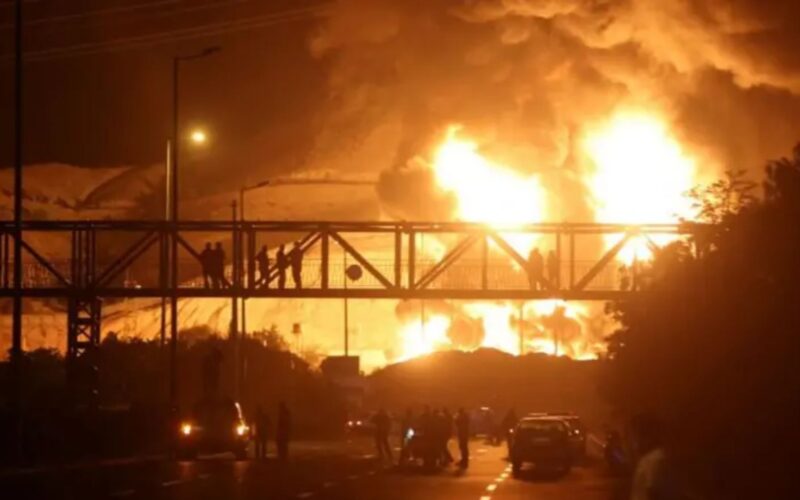
Tehran (Rajeev Sharma): A new round of military action between the United States and Iran has further heightened tensions in the Gulf, with Tehran accusing Washington of undermining diplomatic efforts after American strikes reportedly left one person dead and several others injured.
Iranian officials said the latest attack targeted an agricultural pumping station in the city of Mahshahr, describing the strike as an unjustified escalation. The government maintained that repeated military operations by the US have significantly weakened the possibility of resolving differences through negotiations.
The fresh confrontation unfolded against the backdrop of growing tensions in the Strait of Hormuz, a strategically vital shipping corridor that handles a substantial share of the world’s crude oil exports. Concerns over the security of commercial vessels in the region have intensified in recent days.
The US Central Command (CENTCOM) said its forces carried out precision strikes on multiple Iranian military installations, including missile infrastructure, coastal surveillance systems, air defence assets and drone launch facilities. According to the US military, the operation was aimed at reducing Iran’s capability to threaten international maritime traffic.
American officials also confirmed the use of advanced military platforms, including fighter aircraft, naval vessels and unmanned aerial and maritime systems, during the coordinated operation.
Washington linked the strikes to what it described as recent attacks by Iran’s Islamic Revolutionary Guard Corps (IRGC) on commercial shipping in the Gulf. Tehran rejected the allegations, insisting that the US was using military pressure instead of allowing diplomatic channels to function.
The exchange of hostilities comes days after Iranian forces claimed responsibility for attacks on American military facilities in the region, signalling a continued cycle of retaliation between the two sides.
Analysts warn that the renewed escalation could have consequences beyond the battlefield. Any disruption in the Strait of Hormuz has the potential to affect global energy supplies, increase shipping costs and create volatility in international oil markets.
Several countries have called for restraint, urging both Washington and Tehran to avoid further military escalation and return to diplomatic engagement. However, with both sides continuing to trade accusations and launch retaliatory actions, hopes for an immediate de-escalation remain uncertain.
