

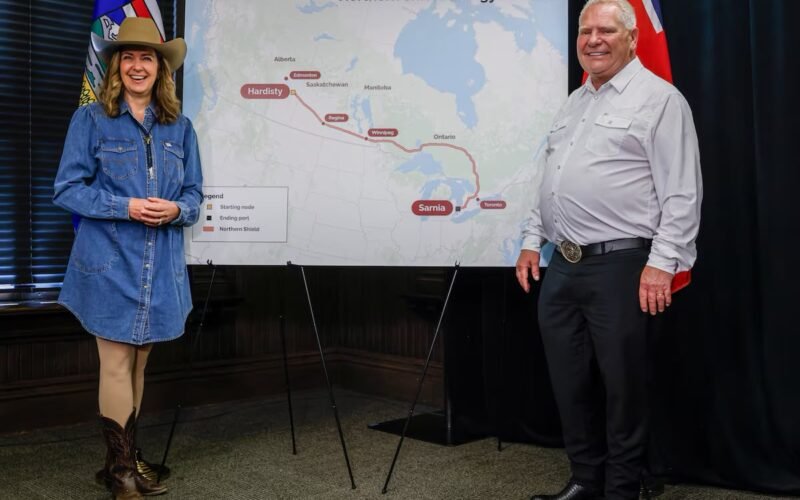
Calgary (Rajeev Sharma): In a bold move that could reshape Canada’s energy map for decades, Alberta and Ontario have joined forces to advance the proposed Northern Shield Energy Corridor, a major pipeline initiative designed to move Alberta crude oil eastward to Ontario refineries and eventually open new export routes to Europe through Atlantic ports.
Premier Danielle Smith described the corridor as a nation building project that would strengthen Canada’s energy independence, create thousands of jobs, and reduce the country’s reliance on the United States as the dominant gateway for Canadian oil exports. She said the project represents an opportunity for Canada to become a true global energy powerhouse by connecting western resources with eastern markets and international customers.
Ontario Premier Doug Ford echoed the call for stronger domestic energy infrastructure, saying Canada must build projects that protect the economy, secure refinery supply, and ensure the country can compete in a rapidly changing global energy market. The proposed corridor would connect Alberta’s vast oil reserves with Ontario’s refining capacity, while laying the groundwork for future shipments to Europe, where demand for secure and responsibly produced energy remains high.
The Northern Shield proposal revives the long debated vision of a west to east Canadian energy corridor after previous pipeline projects, including Energy East, failed to proceed. Supporters argue that today’s geopolitical uncertainty, rising energy demand, and concerns over dependence on U.S. infrastructure have created a renewed sense of urgency for Canada to build its own national energy network. Industry analysts say the project could become one of the largest energy infrastructure developments in Canadian history, with the potential to attract billions of dollars in investment, create long-term employment, and strengthen Canada’s position in global energy markets. However, the corridor would still require extensive regulatory approvals, environmental assessments, Indigenous consultations, and commercial commitments before construction could begin.
The announcement comes amid a broader national push to diversify Canadian energy exports beyond North America. Alberta and the federal government have also been advancing plans for expanded west coast export capacity, signalling a strategic effort to open both Atlantic and Pacific pathways for Canadian energy.
For supporters, the Northern Shield Energy Corridor is more than a pipeline proposal it is a test of whether Canada can build the infrastructure needed to secure its economic future, strengthen national unity, and compete on the world stage. If realized, the project could mark the beginning of a new era in Canadian energy policy, where Canadian resources power Canadian refineries and reach global markets on Canada’s own terms.
