

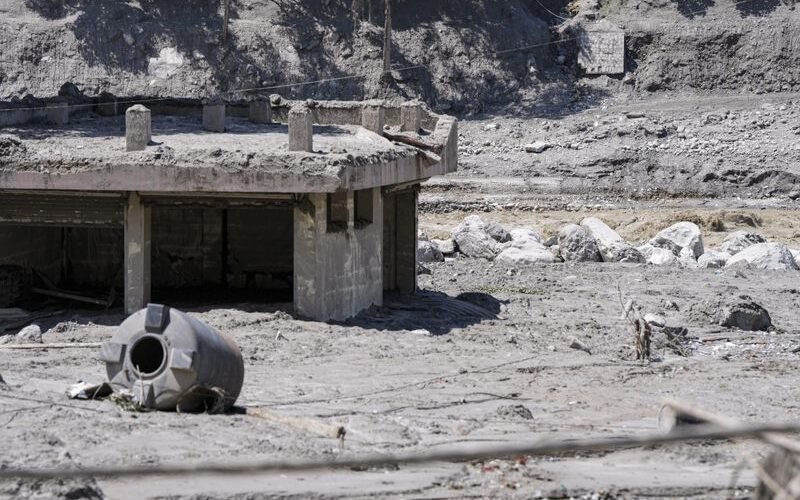
Kathmandu (Rajeev Sharma): Nepal’s devastating flash floods have entered a critical phase, with search and rescue teams continuing to look for missing people while authorities confront growing public health concerns in communities hit by the disaster.
The floods, triggered on August 26, have left a trail of destruction across several parts of Nepal, damaging homes, roads, bridges, hydropower facilities and drinking-water infrastructure. Nepal’s Foreign Ministry said in its latest situation update that 1,287 bodies had been recovered, while around 5,083 people remained missing as of September 4. More than 13,000 people had been rescued.
The toll has continued to change as recovery teams reach previously inaccessible areas and verify information. A later report put the number of deaths at 1,295, underlining the continuing scale of the catastrophe.
Contaminated water raises health concerns
With the immediate rescue effort gradually being accompanied by rehabilitation work, health officials are increasingly worried about disease outbreaks in flood-affected areas.
In Bidur Municipality of Nuwakot district, five of 15 drinking-water samples tested positive for E. coli, according to a report by The Kathmandu Post. Authorities have already chlorinated the affected water sources and are preparing measures to prevent the spread of waterborne illnesses.
Officials are considering a cholera vaccination campaign covering approximately 100,000 vulnerable people if a major diarrhoeal outbreak develops. Plans are also under way to vaccinate about 75,000 children under 15 against measles and rubella, with tetanus and diphtheria vaccinations also being considered for displaced children.
Health experts have warned that overcrowding, displacement, disrupted medical services and unsafe water could increase the risk of communicable and vector-borne diseases. Elderly people, young children and those with existing health conditions are considered particularly vulnerable.
Rescue teams continue difficult operations
Search efforts remain active in several hydropower tunnels affected by the floods. Nepal’s government said rescue teams from India, China and South Korea are working alongside the Nepal Army, while drones and other specialised equipment are being used to reach difficult locations.
A major breakthrough came when two workers were found alive inside a tunnel at the Trishuli 3A Hydropower Project after being trapped for nine days. Their rescue offered a rare moment of hope amid the continuing recovery operation.
Authorities are simultaneously working to restore transportation, electricity and telecommunications in areas cut off by the floods.
Nepal receives international assistance
The scale of the disaster has prompted a growing international response. India has deployed specialised tunnel-rescue personnel, medical specialists and a forensic team to assist Nepal with rescue, treatment and identification efforts.
Indian Ambassador to Nepal Naveen Srivastava has highlighted India’s emergency assistance, including relief flights carrying supplies and specialised teams sent to support Nepal’s response. India has also indicated that it is prepared to consider additional assistance for reconstruction.
The United States is also facing calls to expand its support. A group of American lawmakers has urged Secretary of State Marco Rubio to strengthen search-and-rescue and humanitarian assistance in Nepal, including consideration of a Disaster Assistance Response Team and longer-term reconstruction support.
Government begins early recovery efforts
The Nepal government has started releasing funds to help affected local administrations deal with the immediate aftermath. According to the supplied government figures, NPR 10 million each was allocated to Rasuwa and Nuwakot, while NPR 5 million was earmarked for Dhading. A further NPR 135 million was distributed among 15 affected local governments.
Nepal’s Foreign Ministry said preliminary assessments have placed overall losses across infrastructure, settlements, health, education, agriculture, energy and telecommunications at approximately NPR 387.54 billion, or about US$2.6 billion.
For now, the priority remains locating missing people, assisting displaced communities and preventing a secondary health crisis. As recovery teams move deeper into some of the worst-hit areas, authorities are also preparing for what could become a lengthy rebuilding effort.
