

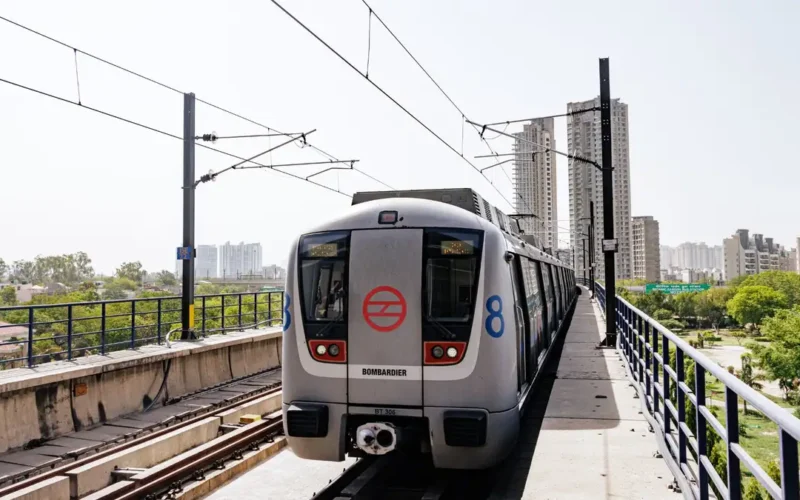
New Delhi (Rajeev Sharma): Commuters across the national capital received relief on Sunday as the Delhi Metro Rail Corporation (DMRC) resumed normal operations across its entire network following the conclusion of the Cockroach Janata Party (CJP) protest at Jantar Mantar.
DMRC confirmed that all metro stations are now fully operational, with passengers able to use both entry and exit gates without restrictions. The restoration marks the end of several days of security-related disruptions that had affected travel in central Delhi.
Over the course of the agitation, authorities had imposed access restrictions at multiple stations due to heightened security concerns. Busy interchange and commercial hubs such as Rajiv Chowk, Central Secretariat, New Delhi, Mandi House, Patel Chowk, Janpath, ITO, Delhi Gate, Khan Market, Lok Kalyan Marg, Indraprastha, Jor Bagh, Barakhambha Road, Ramakrishna Ashram Marg, Shivaji Stadium, Jhandewalan, Supreme Court and Seva Teerth were among those impacted.
With the protest officially withdrawn, security agencies dismantled barricades and eased movement restrictions around the demonstration site, allowing metro services to operate normally once again.
Mobile internet connectivity, which had been suspended in parts of central Delhi as a precaution during the demonstrations, has also been restored. The restrictions had been introduced as thousands of protesters gathered to demand reforms in the examination system following the NEET-UG controversy.
The CJP announced that it was ending its sit-in after receiving assurances from the Central government on key issues raised during negotiations. Party leaders said they had decided to suspend the agitation in good faith, expecting the agreed commitments to be implemented within the promised timeframe.
The protests, which continued for more than a month, gained nationwide attention and ultimately coincided with the resignation of Dharmendra Pradhan as Union Education Minister. Activist Sonam Wangchuk, who observed a prolonged hunger strike during the movement, also ended his fast after the latest developments.
According to the organisation, the government has agreed to consider compensation for families of NEET aspirants who allegedly died by suicide, review legal cases registered against peaceful protesters and examine proposals aimed at strengthening the examination system.
Union Minister J.P. Nadda stated that the Centre had taken note of the concerns raised during discussions with CJP representatives and would evaluate the group’s recommendations on examination reforms before implementing further measures.
Meanwhile, Pralhad Joshi, who has been given additional charge of the Ministry of Education following Pradhan’s resignation, said he would discharge his new responsibilities with sincerity and focus on strengthening the country’s education framework.
