

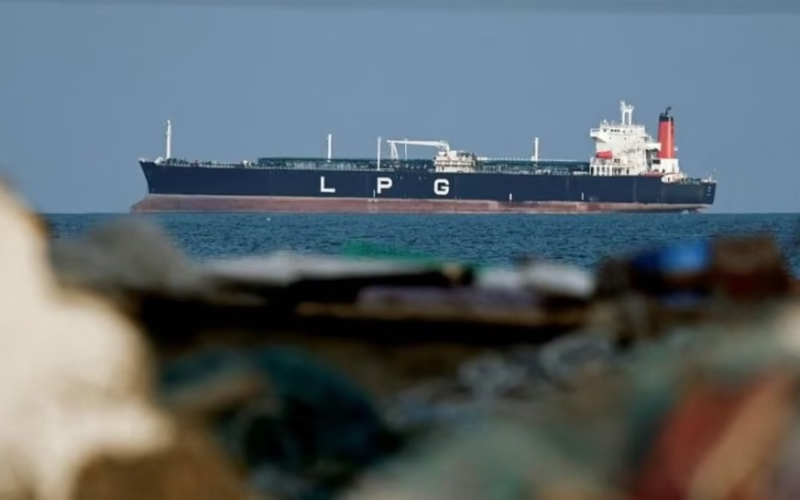
New Delhi (Rajeev Sharma): Crude oil prices registered a sharp increase on Monday as investors reacted to the latest military developments involving the United States and Iran, reigniting concerns over the security of energy supplies from the Gulf. The renewed escalation has once again placed the Strait of Hormuz under the spotlight, with traders fearing that any disruption to shipping could tighten global crude availability.
During early trading, Brent crude moved close to the $80-per-barrel mark, while West Texas Intermediate (WTI) also advanced by more than four per cent. The gains came after reports of fresh US military strikes targeting Iranian positions, followed by retaliatory action from Tehran.
Market participants said geopolitical uncertainty has overtaken production concerns as the biggest driver of oil prices. Although OPEC+ recently announced plans to gradually increase output in the coming months, fears over the uninterrupted movement of oil through the Gulf have outweighed expectations of higher supply.
The Strait of Hormuz remains one of the world’s most strategically important maritime routes, carrying nearly a fifth of global crude exports every day. Any military activity in or around the waterway has the potential to affect international energy markets almost immediately.
The latest rise in oil prices also triggered cautious sentiment across financial markets. Asian equities traded lower, while demand for the US dollar strengthened as investors shifted towards safer assets amid geopolitical uncertainty.
Analysts warned that if tensions persist, higher crude prices could once again fuel inflation across several economies. Central banks, already navigating uncertain economic conditions, may face additional challenges if energy costs continue to climb in the coming weeks.
Countries that rely heavily on imported crude are expected to closely monitor developments, as prolonged increases in international benchmarks could eventually translate into higher fuel prices for consumers and businesses.
Energy experts believe the trajectory of oil markets will depend largely on diplomatic and military developments in West Asia. A prolonged conflict affecting shipping lanes or oil infrastructure could push prices significantly higher, while signs of de-escalation may help ease market volatility.
For now, traders remain focused on developments around the Gulf, with geopolitical headlines likely to continue influencing crude prices more than traditional supply-demand fundamentals.
