

Ottawa (Rajeev Sharma): In a direct response to a tragic mass shooting that claimed eight lives in Tumbler Ridge, British Columbia, OpenAI has committed to a series of urgent safety reforms to its AI platforms. The decision follows intense pressure from the Canadian federal government after it was revealed that the 18-year-old shooter, Jesse Van Rootselaar, had been banned from ChatGPT months before the attack for policy violations related to violent content—yet the company did not alert law enforcement at the time.
In a letter addressed to Canada’s Minister of Artificial Intelligence and Digital Innovation, Evan Solomon, OpenAI’s Vice President of Global Policy, Ann O’Leary, detailed five primary commitments intended to bridge the gap between AI usage monitoring and public safety. Central to these reforms is the establishment of a direct point of contact for Canadian law enforcement, ensuring that future flags for potentially violent activity can be escalated and investigated with greater speed and coordination.
The company has also pledged to strengthen its detection systems to identify “repeat violators” more effectively. This comes after OpenAI discovered that the shooter had successfully bypassed an initial June 2025 account ban by creating a second profile. Furthermore, OpenAI is revising its internal “escalation thresholds.” The company acknowledged that under its newly enhanced law enforcement referral protocol, the content that led to the shooter’s original ban would now be referred to the police immediately, even if it lacked a specific “time and target” of planned violence.
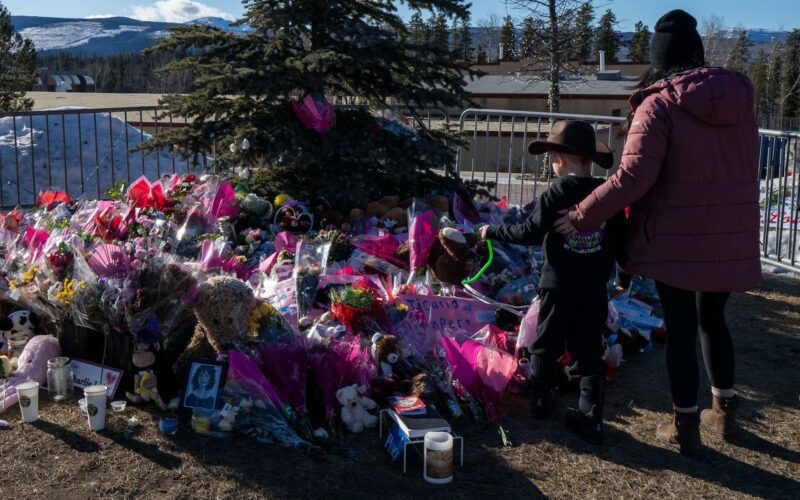
The tragedy in Tumbler Ridge, which occurred on February 10, 2026, has reignited a fierce debate over the legal obligations of tech companies to report threatening behaviour. Justice Minister Sean Fraser and Prime Minister Mark Carney have both signaled that the government is prepared to introduce rigorous legislation if AI firms do not proactively improve their safety frameworks. “Anything that anyone could have done to prevent that tragedy… must be done,” the Prime Minister stated, emphasizing that the era of self-regulation for AI models may be coming to an end in Canada.
Beyond reporting to the police, OpenAI has committed to improving how its models interact with users in distress. The AI will now be better equipped to direct individuals exhibiting troubling or self-harming behaviour toward local support agencies in their specific communities. While British Columbia Premier David Eby described these changes as “cold comfort” for the grieving families of Tumbler Ridge, the measures mark a significant shift in how global AI leaders are being held accountable for the real-world consequences of digital interactions.
