

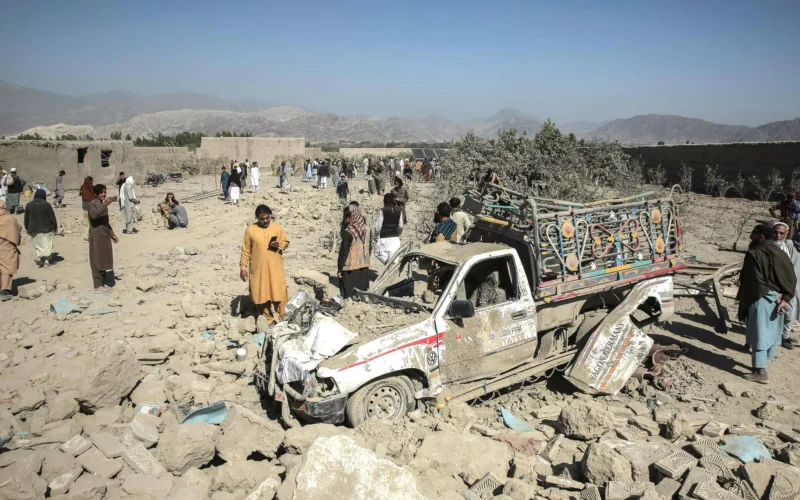
Islamabad/Kamul (Rajeev Sharma) — The long-simmering tensions between Pakistan and the Taliban-led administration in Afghanistan erupted into a full-scale military conflict on Friday, February 27, 2026. In a dramatic escalation, Pakistan’s Defence Minister Khawaja Asif officially declared “open war” against Kabul, accusing the Taliban of exporting terrorism and harboring global militant groups. This declaration followed a series of retaliatory Pakistani air strikes targeting Kabul, Kandahar, and Paktia, marking a point of no return in the diplomatic and security relations between the two neighbours.
The immediate catalyst for this declaration was a massive cross-border operation launched by Afghan forces late Thursday, February 26. According to the Afghan Ministry of National Defence, their forces killed 55 Pakistani soldiers and captured two bases and 19 outposts along the Durand Line. Kabul characterized the four-hour operation as a necessary response to previous Pakistani violations of Afghan territory that allegedly resulted in the deaths of women and children. Afghan officials also claimed to have seized a significant cache of weaponry and destroyed a Pakistani tank during the assault, which took place across the provinces of Paktika, Khost, Nangarhar, and Kunar.
In swift retaliation, Pakistan launched Operation “Ghazab Lil Haq” (Wrath of the Truth). Islamabad’s spokesperson, Mosharraf Zaidi, claimed that the counter-offensive has already resulted in the deaths of 133 Taliban fighters and injured over 200 more. Pakistani security forces reportedly destroyed 27 Taliban posts and successfully reclaimed nine during the initial waves of the operation. Defence Minister Khawaja Asif’s statement on social media underscored the severity of the situation, stating that Pakistan’s “cup of patience has overflowed” and warned that the military would now employ its full might against the Taliban regime.
Taliban spokesperson Zabihullah Mujahid condemned the Pakistani air strikes, describing them as “cowardly” while noting that, fortunately, no immediate civilian casualties were reported in the targeted cities. However, the Afghan side reported that eight of their fighters were martyred during the ground clashes on Thursday. As both nations exchange heavy fire and claim hundreds of casualties, the international community has expressed grave concern over the potential for a prolonged regional war. With the Durand Line becoming a front line for active warfare, the stability of the entire South Asian region hangs in the balance.
