

Tehran (Rajeev Sharma): Iran has responded sharply to Washington’s proposed maritime restrictions by cautioning that any disruption in the Strait of Hormuz could trigger a ripple effect across global energy markets, with consequences likely to be felt most strongly by American consumers.
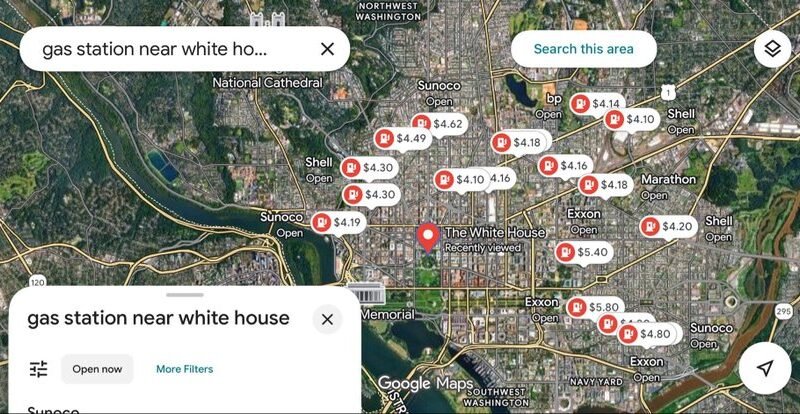
Iranian Parliament Speaker Mohammad Bagher Ghalibaf took an unconventional route to deliver the message, sharing a mathematical expression on social media to illustrate how tightening supply chains could lead to amplified increases in oil prices. Alongside the formula, he posted current fuel rates in the United States, suggesting that they may soon appear modest in comparison to what lies ahead.
His remarks came soon after US President Donald Trump approved a naval move to restrict shipping linked to Iranian ports, following the collapse of diplomatic efforts between the two sides. The decision, announced by US Central Command, is aimed at limiting Iran’s ability to export oil and gas—key contributors to its economy.
The symbolic equation shared by Ghalibaf was widely interpreted as a warning that any blockade would not only push prices upward but could also create a compounding effect, where initial shocks lead to further instability in global markets.
Financial markets appeared to react quickly to the growing uncertainty. Oil benchmarks climbed past the $100 per barrel mark, reflecting concerns over supply disruptions in one of the world’s most critical energy corridors. Analysts noted that even partial restrictions in the region can have disproportionate effects on pricing due to the volume of oil transported through the Strait of Hormuz.
The developments follow unsuccessful negotiations in Islamabad, where US Vice President JD Vance and Iranian representatives failed to bridge key differences. While both sides acknowledged discussions were extensive, disagreements over strategic and nuclear issues prevented any agreement.
Iranian officials have maintained that they remain open to dialogue but have criticised what they describe as unrealistic expectations from the US side. At the same time, Washington has indicated it will continue to pursue measures it deems necessary to protect its interests.
With rhetoric intensifying and economic stakes rising, the standoff has once again placed the Strait of Hormuz at the centre of global attention, raising fears of prolonged instability in energy markets and further geopolitical strain.
