

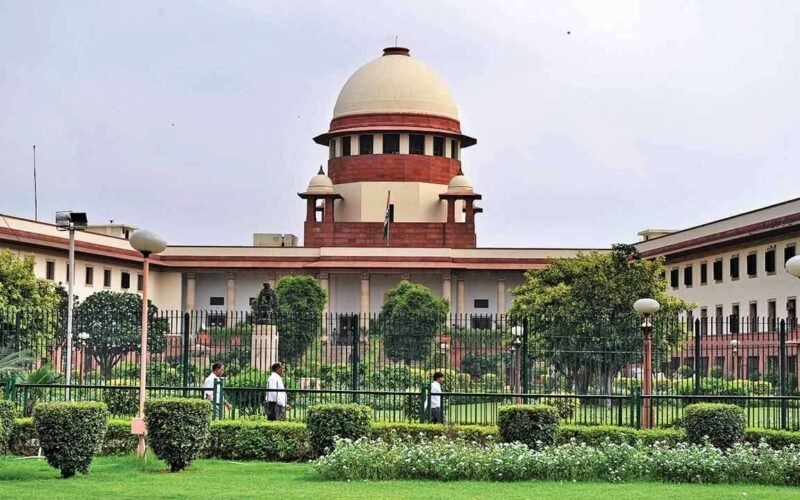
New Delhi (Gurpreet Singh): The Supreme Court of India on Tuesday quashed the preventive detention of Mulla Afroz, accused by police of being a key figure behind the 2024 Sambhal communal clashes, ruling that a confession made before a police officer cannot serve as the sole legal foundation for detention under the National Security Act (NSA), 1980. Setting aside the detention and its subsequent confirmation, a Bench comprising Justice Dipankar Datta and Justice Sheel Nagu ordered his immediate release, provided his custody is not required in any other pending case.
Criticizing the state’s reliance on inadmissible confessions to bypass ordinary legal safeguards, the apex court ordered the Uttar Pradesh government to pay Afroz ₹10 lakh in compensation within one month. The Bench observed that Afroz had already secured bail in all substantive criminal cases connected to the incident, noting that invoking preventive detention under such circumstances effectively converted the legal process into punishment and caused significant loss of personal liberty.
The ruling firmly reiterated that preventive detention remains an exceptional measure intended strictly for the rarest of circumstances and demanding the highest degree of administrative circumspection. The judges highlighted that because the law itself views confessions made in police custody with suspicion and excludes them from substantive evidentiary value, an uncorroborated confession cannot sustain the subjective satisfaction legally mandated to curtail a citizen’s liberty under preventive detention statutes.
The case traces back to the communal unrest in Sambhal in November 2024, which erupted during a court-mandated survey of the local Shahi Jama Masjid. Uttar Pradesh authorities invoked the NSA against Afroz on October 13, 2025, an order confirmed on November 28, 2025, for a one-year tenure. In overturning the Allahabad High Court’s prior endorsement of the state action, the Supreme Court held that the detaining authority had exercised its draconian preventive powers unlawfully and without valid independent material.
