

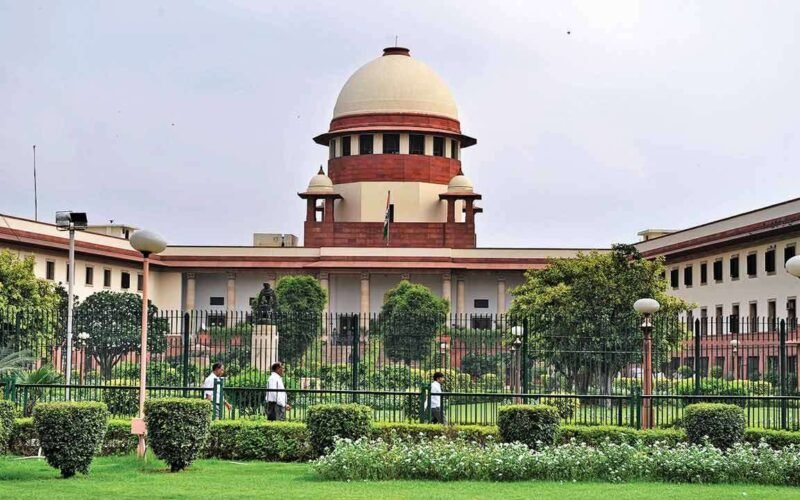
New Delhi (Gurpreet Singh): The Supreme Court of India on Friday modified its May 2025 verdict, reducing the mandatory legal practice requirement for prospective candidates from three years to one year for entry-level judicial service examinations. Delivered in a 2:1 split verdict by a three-judge bench comprising Chief Justice of India Surya Kant, Justice A.G. Masih, and Justice K. Vinod Chandran, the judgment establishes a modified framework combining limited prior courtroom practice with post-selection institutional training and supervised clerkships.
Under the ruling, candidates appearing for examinations notified between May 20, 2025, and March 31, 2027, have been granted a full exemption from the practice requirement to avoid sudden hardship for law graduates. Selected candidates during this transitional window will initially be appointed as trainee judicial officers and must undergo one year of training at a state judicial academy followed by a one-year structured clerkship. For recruitment exams notified after April 1, 2027, candidates will be required to possess at least one year of certified active bar practice before applying, followed by the same two-year training and clerkship curriculum upon selection.
Writing for the majority, Chief Justice Kant observed that while prior professional exposure remains necessary for judicial temperament, the mere passage of time at the Bar is not the sole determinant of meaningful experience. Justice Chandran dissented, expressing concern that relaxing the practice condition could risk cultivating careerist officers rather than seasoned jurists. The top court ordered state governments and high courts to notify the necessary rule amendments within three months, adding that the five-year scheme will subsequently undergo empirical review to assess recruitment quality and training efficacy.
