

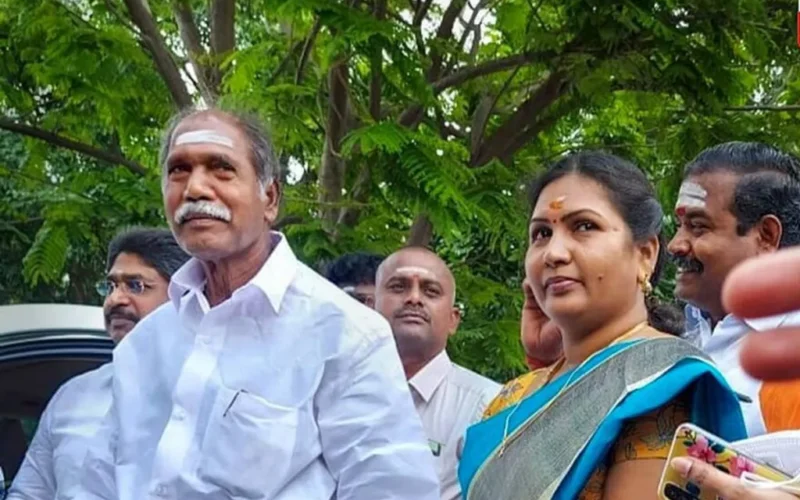
Puducherry (Gurpreet Singh) — Riding a significant pro-incumbency wave, the AINRC-led National Democratic Alliance has emerged victorious in the Puducherry Assembly elections, securing a mandate to form the government for a successive term. Chief Minister N. Rangasamy solidified his leadership by winning both constituencies he contested, Thattanchavady and Mangalam, as the latest figures from the Election Commission confirm a total of 11 seats for the All India N.R. Congress. The alliance, bolstered by the Bharatiya Janata Party’s four seats and single-seat contributions from the AIADMK and LJK, demonstrated a resilient grip on the Union Territory despite shifts in the neighbouring political landscape.
The victory for the NDA coincided with a historic performance by actor Vijay’s Tamilaga Vettri Kazhagam in neighbouring Tamil Nadu, which also managed to secure two seats within the Puducherry assembly. This regional shift added a layer of complexity to the 30-seat House, which also includes three nominated members. Among the notable individual triumphs within the coalition was that of incumbent minister A. Namassivayam, who successfully retained his seat for the BJP. On the opposition front, the DMK managed to secure five seats, while the Congress party saw its influence further dwindle, holding on to just a single seat.
Chief Minister Rangasamy’s dual victory marks a redemptive moment in his political career. In Thattanchavady, widely considered his pocket borough, he trounced Neyam Makkal Kazhagam rival E. Vinayagam by a margin of 4,441 votes. His success extended to Mangalam, where he defeated the DMK’s S.S. Rangan by a more substantial 7,050 votes. This achievement stands in contrast to the 2021 elections, where his attempt to capture two seats was thwarted by a loss in Yanam. While the Chief Minister must now decide which of the two seats to vacate, his dominant performance has effectively sidelined key rivals, including former Chief Minister Ve. Vaithilingam.
The geopolitical significance of Puducherry, bordered by the Tamil Nadu districts of Cuddalore and Villupuram, remains a focal point for national parties looking for a southern foothold. The AINRC’s ability to navigate local sentiment while maintaining a federal alliance has proven to be the winning formula for Rangasamy’s administration. As the territorial assembly prepares for the new term, the focus shifts to the official formation of the cabinet and the strategic vacancies created by the Chief Minister’s dual success. Analysts suggest that the NDA’s continued dominance reflects a preference for administrative stability over the fragmented promises of the fractured opposition.
