

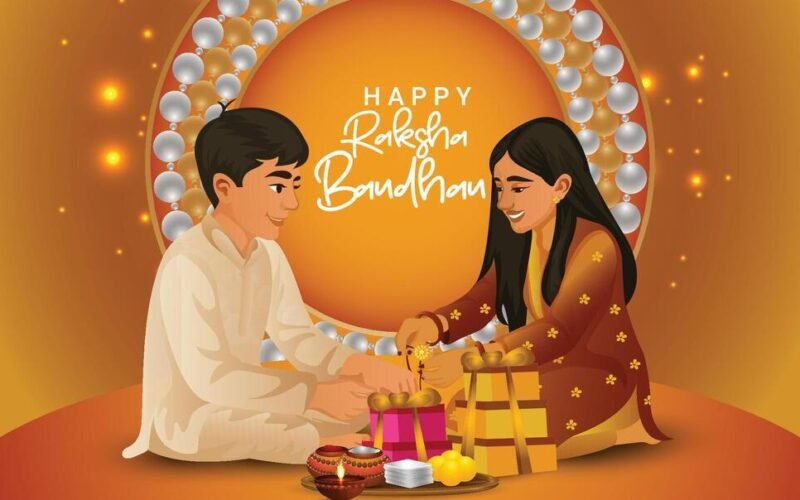
Chandigarh (Rajeev Sharma): Raksha Bandhan is being celebrated across Punjab on Friday, with religious experts saying there is no Bhadra obstruction during this year’s Rakhi ceremony. The morning hours have been described as especially favourable, while the ritual can also be performed later in the day according to the cited interpretations.
Acharya Sohan Vedpathi of Shri Siddhpeeth Dandi Swami said the Purnima Tithi remains in effect from sunrise until 9:48 am on August 28. Since the sun rises at around 6 am in most parts of Punjab, devotees have a morning window of nearly four hours for the traditional ceremony.
Astrologer Rachna Sharma said the presence of Purnima at sunrise makes the morning period auspicious. She also noted that there is no religious restriction preventing sisters from tying Rakhi after the morning window.
Bhadra Period Over Before Sunrise
The timing of Bhadra is traditionally checked before deciding when Rakhi should be tied.
According to Acharya Sohan Vedpathi, Bhadra concludes before sunrise this year. Therefore, sisters do not have to wait for its conclusion before carrying out the Raksha Bandhan rituals.
The Udaya Tithi, or the lunar date prevailing at sunrise, is another factor considered important in determining the festival. Based on this interpretation, the Rakhi ceremony remains permissible throughout the day.
Panchak Begins, Experts Give Ritual Advice
The Panchak period began on August 27. In view of this, some religious practitioners have advised devotees who follow the tradition to first place or offer the Rakhi before the household deity and then proceed with the ceremony.
The advice is intended for families who observe these customary practices as part of their festival rituals.
Lunar Eclipse Will Not Bring Sutak in India
Another celestial event coincides with Raksha Bandhan this year—a lunar eclipse on August 28.
Acharya Sumit Vedpathi said the eclipse will not be visible from India. Therefore, the Sutak period associated with an observable eclipse will not apply to devotees celebrating the festival in the country, according to the religious interpretation cited.
Families can consequently observe the festival and perform their customary rituals without changing their plans because of the eclipse.
Traditional Rakhi Thali Prepared at Homes
The Raksha Bandhan ceremony traditionally begins with preparations for the puja thali. The essential items usually include a Rakhi, roli or kumkum, akshat, a Mauli, flowers, a lamp and sweets.
Depending on individual family traditions, fruits, coconut and a vessel containing water may also be included.
The ceremony generally involves offering prayers, applying tilak to the brother’s forehead and placing akshat. After the aarti, the sacred Mauli may be tied first, followed by the Rakhi.
BSF Personnel to Receive Rakhis at Attari
Raksha Bandhan celebrations in Punjab are not limited to homes.
Former minister and BJP leader Lakshmi Kanta Chawla traditionally visits the Attari border to celebrate the festival with BSF personnel. She carries Rakhis for soldiers stationed there and offers prayers for their safety and well-being.
Women from various organisations also participate in programmes at the border, turning the festival into an occasion to honour personnel serving away from their families.
Special Arrangements in Punjab Jails
Prisons across Punjab also witness Raksha Bandhan-related meetings.
Sisters are permitted to meet brothers lodged in jails, including those facing trial, and tie Rakhis during the festival. Similar arrangements allow brothers to meet women prisoners in accordance with prison regulations.
Dandi Swami Temple Sees Devotee Gatherings
Religious places in Ludhiana are also witnessing special activity on the occasion.
Women visit Shri Dandi Swami Temple carrying Rakhis and offer them to Shri Dandi Swami Ji. Devotees follow similar traditions at other temples, where Rakhis are offered to deities as part of the festival observance.
With Bhadra ending before sunrise and the lunar eclipse not being visible in India, devotees following the cited religious guidance can celebrate Raksha Bandhan without an eclipse-related Sutak restriction or a Bhadra delay.
