

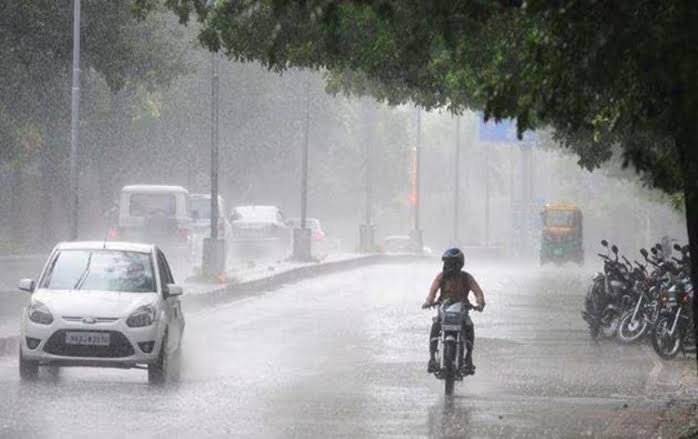
Chandigarh: Relief from the heat could be limited on Sunday as only isolated parts of Punjab are expected to receive rain, while most areas are likely to remain warm and humid amid a prolonged rainfall shortfall.
The Meteorological Centre, Chandigarh has forecast light to moderate showers at isolated places in Pathankot, Hoshiarpur, Nawanshahr, Rupnagar and Mohali on August 30.
In Chandigarh, the sky is expected to remain partly cloudy. Residents may also witness one or two spells of rain or thundershowers during the day.
Bathinda touches 37.9°C
Rainfall remained scarce across Punjab over the last few days, contributing to a gradual rise in temperatures.
The average maximum temperature in the state edged up by 0.1°C and is now 2.1°C above normal. Bathinda was the hottest location, recording a maximum of 37.9°C.
The state has so far registered a 32% rainfall deficit during the current monsoon season.
Rain activity remains weak
Most districts have experienced little precipitation recently. On Saturday, Pathankot and Ropar recorded 1 mm of rain each, while showers were reported in Amritsar but did not make it into the official rainfall records.
The weak rain activity has meant that temperatures have remained elevated, with maximum readings across Punjab ranging from 33.1°C to 37.9°C.
Cloud cover, humidity likely to continue
Weather conditions are being influenced by two systems. The monsoon trough is passing through Amritsar, while a Western Disturbance is active over northern Pakistan and adjoining Punjab.
The combination is supplying moisture to the region and could result in scattered showers. However, a broad spell of rain across Punjab is not expected at present.
The weather is therefore likely to remain hot, humid and partly cloudy, with rain confined to a few pockets.
High temperatures add to power demand
The persistent heat is also putting pressure on Punjab’s electricity system.
Power demand during the daytime has climbed to around 15,071 MW. Against this requirement, the state is generating approximately 4,502 MW internally and procuring nearly 10,569 MW from the central grid.
This means Punjab is meeting about 30% of its electricity requirement through its own generation, while the remaining 70% is being sourced from outside.
With temperatures staying above normal and rainfall remaining uneven, residents may have to contend with another stretch of hot and humid weather despite the possibility of isolated showers.
