

Khyber Pakhtunkhwa (Gurpreet Singh): Pakistan has declared a state of emergency in Khyber Pakhtunkhwa, suspending the provincial government led by jailed former Prime Minister Imran Khan’s Pakistan Tehreek-e-Insaf (PTI) and bringing the region under federal oversight.
President Asif Ali Zardari approved the measure on Sunday, October 11, following a recommendation from Prime Minister Shehbaz Sharif’s federal cabinet. The government cited a deteriorating security situation, increasing militant violence and what it described as the provincial administration’s failure to cooperate in counterterrorism efforts.
The decision places the northwestern province, which borders Afghanistan, under governor’s rule. It comes amid heightened tensions between the federal government and PTI, whose supporters have been campaigning for Khan’s release from prison and preparing for a march towards Islamabad.
Why Has Pakistan Declared An Emergency In Khyber Pakhtunkhwa?
The federal government has argued that the security situation in Khyber Pakhtunkhwa has worsened and accused the PTI-led administration of failing to coordinate adequately with Islamabad on counterterrorism operations.
The federal cabinet, chaired by Prime Minister Shehbaz Sharif, recommended invoking Articles 232 and 234 of Pakistan’s Constitution. President Zardari subsequently approved the move.
Pakistan’s Interior Minister Mohsin Naqvi accused the provincial administration of prioritising efforts to secure Khan’s release over tackling militant threats. Federal officials also cited delays in decision-making and inadequate coordination between the provincial and central governments.
The province has experienced militant violence, much of it attributed by Pakistani authorities to the Tehrik-e-Taliban Pakistan (TTP), also known as the Pakistani Taliban.
However, the federal government’s allegations against the provincial administration are disputed and form part of a wider political confrontation between the two sides.
What Happens Under Governor’s Rule In Pakistan?
Under the emergency measures, the provincial government led by PTI effectively ceases to function in its previous form, with key executive responsibilities transferred to the provincial governor, who represents the federal government.
Pakistan’s Law Minister Azam Nazeer Tarar announced that an 11-member advisory council would assist the governor in running provincial affairs.
The federal authorities have invoked constitutional provisions dealing with emergency powers and the breakdown of constitutional governance. Article 232 concerns the proclamation of an emergency, while Article 234 provides for action when a provincial government cannot be carried on in accordance with the Constitution.
The move significantly alters the political administration of Khyber Pakhtunkhwa, which had been governed by Imran Khan’s party.
Why Is Imran Khan’s PTI Opposing The Decision?
PTI has condemned the suspension of its provincial government, describing the move as undemocratic and politically motivated.
Khan’s spokesperson Zulfiquar Bukhari called it a “disguised coup”, arguing that the provincial government had a legitimate electoral mandate. The party has also accused the federal authorities of undermining provincial autonomy.
The emergency declaration comes after negotiations between PTI and the federal government failed to resolve differences over a planned protest march and demands concerning Khan’s imprisonment.
PTI has sought Khan’s release, access to medical treatment and permission for his family to meet him. The federal government has maintained that he is receiving appropriate care and that meetings with the jailed former prime minister cannot be used for political purposes.
Khan has been in prison since 2023 in connection with corruption and other cases. He and his party maintain that the cases against him are politically motivated.
Is Pakistan Facing Protests After The Emergency Declaration?
The decision comes amid a campaign by PTI supporters demanding Khan’s release, with the party planning a march towards Islamabad.
Khyber Pakhtunkhwa Chief Minister Sohail Afridi had urged supporters to prepare for the march, which has raised concerns among federal authorities about possible unrest. The government has cited security threats and militant attacks while seeking to prevent the situation from escalating.
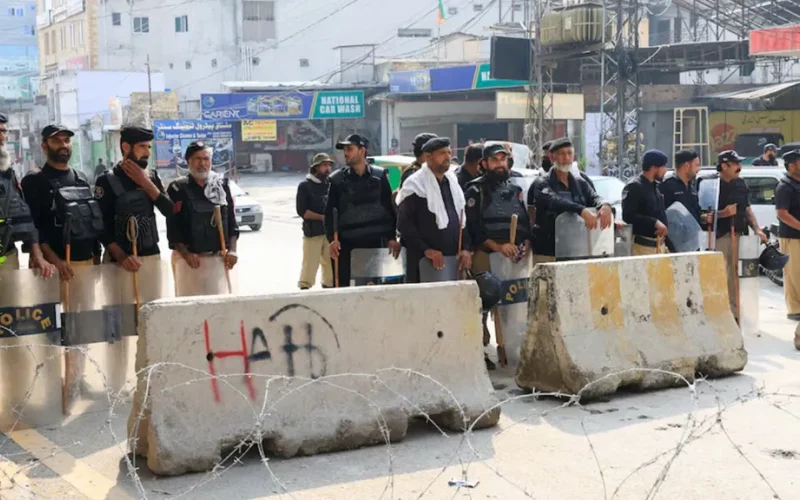
Authorities have deployed additional security personnel and placed restrictions on movement along key routes in anticipation of protests. Police have also detained some PTI supporters, according to reports.
The suspension of the provincial government has further intensified the confrontation between PTI and the federal coalition led by Sharif.
What Happens Next In Pakistan?
The immediate focus will be on how the governor and advisory council administer Khyber Pakhtunkhwa, whether the emergency measures face legal or political challenges, and how PTI responds to the loss of control over the province.
The federal government has defended its decision as necessary to address the security crisis. PTI, meanwhile, has framed it as an attack on its electoral mandate and provincial autonomy.
The developments place Pakistan’s security concerns and its political dispute over Imran Khan’s imprisonment on a collision course, with the planned protest march adding uncertainty to the situation.
