

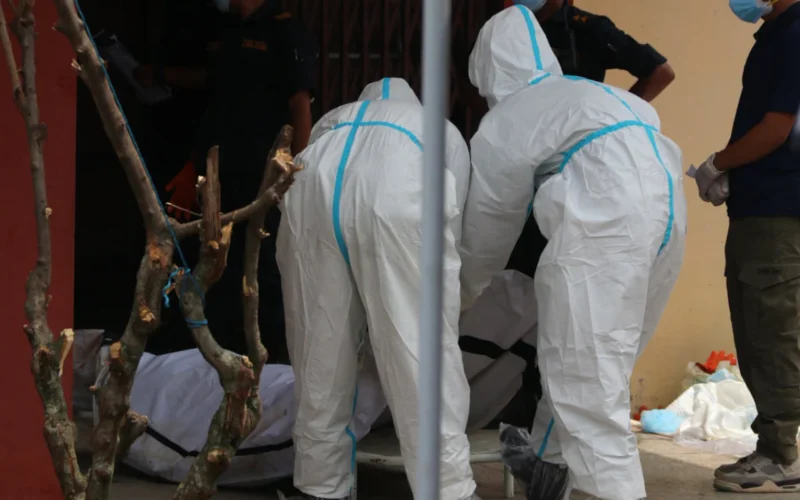
Kathmandu (Rajeev Sharma): Nepal is preparing to bury unidentified and unclaimed victims of this week’s devastating flash floods as authorities struggle with the sheer number of bodies recovered and the limited facilities available to preserve them.
More than 700 bodies have been recovered since the floods swept through villages and towns on Wednesday. Among the worst-affected areas is Chitwan, where 233 bodies have been recovered so far.
The large number of remains has put considerable pressure on local hospitals and temporary storage facilities. Authorities say burial has become necessary as the bodies deteriorate and health concerns increase.
DNA collected before every burial
The decision to bury the unidentified victims does not mean families will lose the opportunity to claim them later.
Officials are collecting DNA samples from the bodies before burial and assigning each one a unique identification number. Details about the recovery location are also being recorded.
More than 100 bodies had undergone DNA profiling by Saturday afternoon, officials said.
These records are intended to allow authorities to establish a match if relatives later provide DNA samples while searching for missing family members.
Burial sites carefully documented
Authorities are also designing the burial process to make future exhumation possible.
Pits are being dug to a depth of approximately 1.5 metres, while a gap of about 40 centimetres is being maintained between individual remains.
Each body is being placed inside a bag marked with its identification number. Concrete platforms and signboards displaying the corresponding numbers are also being installed at burial locations.
Officials plan to record the burials through photography and video, while the sites will be geo-tagged to ensure their exact locations can be traced in the future.
Families can use DNA matching system
People whose relatives remain missing will be able to submit DNA samples at designated hospitals.
The samples will be compared with genetic material collected from the unidentified bodies. Once a match is confirmed, the body’s identification number will help police locate the relevant burial record.
Authorities can then identify the exact burial site and arrange for the remains to be exhumed and handed over to the family.
Chitwan faces storage crisis
Chitwan has been particularly affected by the large number of recovered bodies. Officials said a building had been temporarily used as a cooling facility to preserve the remains, but its capacity was eventually exhausted.
With decomposition accelerating, health experts reportedly warned that keeping large numbers of bodies in inadequate conditions could create hygiene and infection concerns.
The administration therefore decided to proceed with burials while maintaining detailed records for possible identification later.
Thousands remain unaccounted for
The scale of the disaster remains evident from the number of people still missing. Officials estimate that more than 2,500 people, including hundreds of foreign nationals, remain unaccounted for.
Police have also made details of unidentified and unclaimed bodies available through a website in an effort to help families locate missing relatives.
As rescue and recovery operations continue, Nepal’s DNA-based identification system is expected to play a crucial role in helping families establish what happened to loved ones whose remains could not initially be identified.
