

CHANDIGARH (Balwinder Singh) — The India-United Kingdom Comprehensive Economic and Trade Agreement (CETA) has unlocked vital international expansion opportunities for Haryana’s industrial hubs, micro, small, and medium enterprises (MSMEs), agricultural producers, and services sector. Implemented on July 15, 2026, the bilateral pact provides duty-free access for nearly 99 per cent of Indian export lines to the United Kingdom, covering virtually the entire trade value.
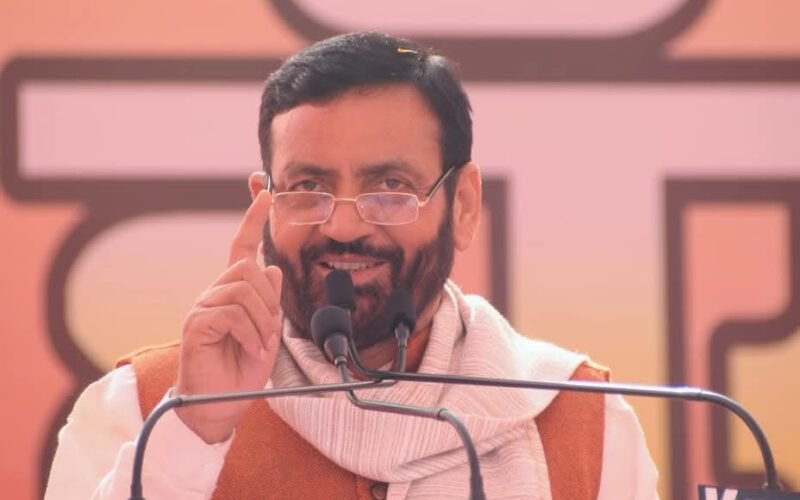
Haryana Chief Minister Nayab Singh Saini stated on Tuesday that the agreement aligns directly with the central government’s vision of establishing India as a developed nation by 2047 through stronger global trade partnerships. The Chief Minister noted that Haryana’s diverse manufacturing base, agriculture, engineering, textiles, and information technology sectors stand to gain substantially from the tariff reductions, enabling domestic goods to enter British markets at competitive prices while integrating local exporters into global supply chains.
The tariff elimination provides a major commercial advantage across key sectors including textiles, apparel, leather, footwear, gems, jewellery, chemicals, engineering goods, auto parts, pharmaceuticals, processed foods, and handicrafts, where tariffs previously ranged from 4 to 70 per cent. This development directly benefits industrial clusters such as Panipat’s textile and home furnishing industry, the Gurugram-Manesar automobile belt, Faridabad’s engineering and manufacturing zones, and state-wide agro-processing units. Demonstrating immediate momentum, Haryana dispatched its first duty-free export consignment of industrial fasteners to the UK on July 15, 2026.
In the agricultural and food processing sectors, the agreement provides broad duty-free access to British markets for Indian agricultural exports, excluding a narrow list of sensitive commodities. This framework creates growth opportunities for Haryana’s exports of fruits, vegetables, processed foods, spices, and value-added grain products, benefiting farmers, Farmer Producer Organisations (FPOs), and regional food processors.
Beyond physical goods, the agreement extends access to 137 service sub-sectors, including IT, IT-enabled services, professional and business consulting, financial services, telecommunications, and education. This presents substantial scale-up potential for digital service hubs in Gurugram and surrounding districts. The pact also simplifies entry procedures for skilled professionals—such as engineers, architects, culinary specialists, yoga instructors, and musicians—and incorporates a three-year social security contribution exemption in the UK for Indian professionals and their employers, enhancing Haryana’s service-led growth and employment creation.
