

New Delhi (Gurpreet Singh): The Election Commission of India has mandated its regional polling branches to flag individuals suspected of being non-citizens and refer their files to authorized legal channels. This administrative order has been integrated into the current Special Intensive Revision of the country’s voter logs. Detailed execution protocols were distributed to State Chief Electoral Officers to refine the transparency of the electoral register.
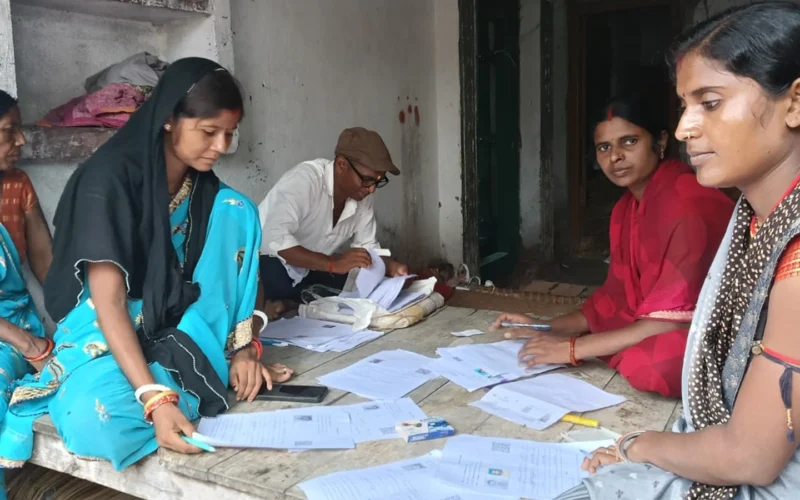
As per the operational guidelines released on May 14, Electoral Registration Officers, alongside their assistants, hold autonomous jurisdiction to transfer cases of questioned nationality to regulators operating under the Citizenship Act of 1955. In instances where physical verification forms are missing or unreturned, grass-roots Booth Level Officers must interview neighbours to verify if an elector has died, relocated, or represents a duplicate or missing entry.
The updated guidelines arrive on the heels of findings recorded during previous registration drives. During the preparatory phase for the voter update in Bihar last year, field staff noted the presence of multiple individuals originating from Bangladesh, Nepal, and Myanmar. While the commission abstained from publishing precise statistics or documentation regarding these findings, Opposition coalitions condemned the initiative, describing it as an attempt to purge specific voter blocks.
The active Phase-III of this intensive verification campaign spans 16 states and three Union Territories, impacting roughly 36.73 crore registered voters. The rolling fieldwork officially commenced on May 30 across territories including Delhi, Haryana, Punjab, Maharashtra, Karnataka, Telangana, Odisha, and Jharkhand. A workforce of over 3.94 lakh Booth Level Officers is executing the door-to-door validation process, working in tandem with 3.42 lakh party-appointed agents.
This third phase follows completed enumeration drives in several major regions, including West Bengal, Uttar Pradesh, Tamil Nadu, Rajasthan, and Gujarat, alongside a dedicated revision project in Assam. The impact of these clean-up operations was clearly visible during Phase-II, which resulted in a 10.2 per cent reduction in the collective voter register across twelve territories. That particular exercise removed more than 60 lakh deceased voters, reducing the total electorate in those zones from 50.99 crore to 45.81 crore.
