

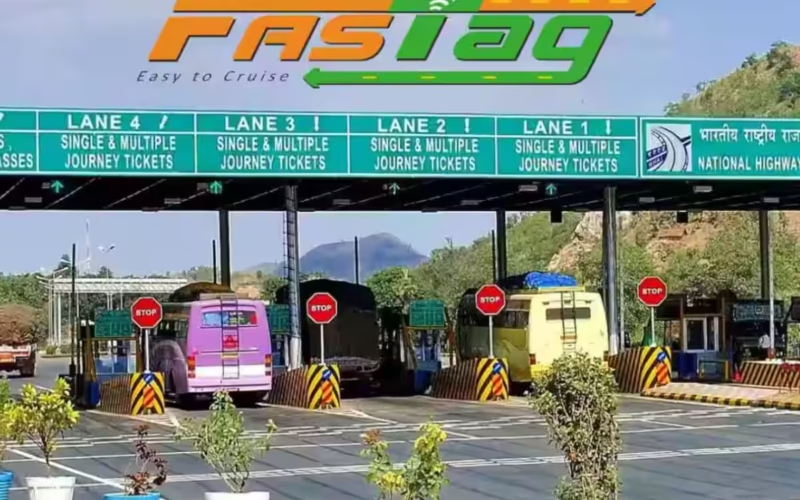
New Delhi (Gurpreet Singh): The Ministry of Road Transport and Highways (MoRTH) implemented a fully digital tolling ecosystem across India’s National Highway network on Saturday, April 11, 2026. Under the new mandate, cash payments have been officially discontinued at over 1,150 fee plazas nationwide. All user fee payments are now processed exclusively via FASTag or Unified Payments Interface (UPI). This transition is part of the government’s push to eliminate congestion, increase lane throughput, and ensure greater transparency in revenue collection.
While cash is no longer an option, the ministry has introduced a tiered digital payment structure. Commuters with a valid, functional FASTag will pay the standard applicable fee. However, those opting to pay via UPI due to a missing or non-functional FASTag will be charged 1.25 times the regular toll amount. This 25% surcharge serves as a deterrent to discourage the manual handling of digital transactions and promote the seamless radio-frequency identification (RFID) technology that FASTag provides.
Election-related exemptions and regional status:
- Exempted States: The digital-only transition has been temporarily deferred in Tamil Nadu, Kerala, Assam, and West Bengal, along with the Union Territory of Puducherry.
- Model Code of Conduct: Officials stated that the rollout was paused in these regions due to the Model Code of Conduct (MCC) currently in force for the ongoing 2026 Legislative Assembly elections. In these areas, existing payment methods, including cash, will continue until the electoral process concludes.
- Enforcement: In all other states, vehicles failing to pay digitally face strict penalties. If a driver cannot pay via FASTag or UPI at the plaza, they may receive an electronic notice for unpaid dues. Failure to clear these dues within three days will result in the fine doubling.
FASTag Annual Pass updates
Coinciding with the digital-only shift, the National Highways Authority of India (NHAI) has revised the FASTag Annual Pass fee for the 2026-27 financial year. Effective April 1, the pass price increased from ₹3,000 to ₹3,075. The pass remains a popular choice for frequent travellers, allowing for either one year of unlimited travel or up to 200 trips on national highways, providing a cost-effective alternative to per-trip payments.
The government also clarified that the long-standing practice of government officials and military personnel bypassing tolls by showing physical identity cards in private vehicles has ended. Only official vehicles on duty are eligible for “Exempted FASTags,” while personal travel by officials now requires the use of a standard FASTag or the Annual Pass.
