

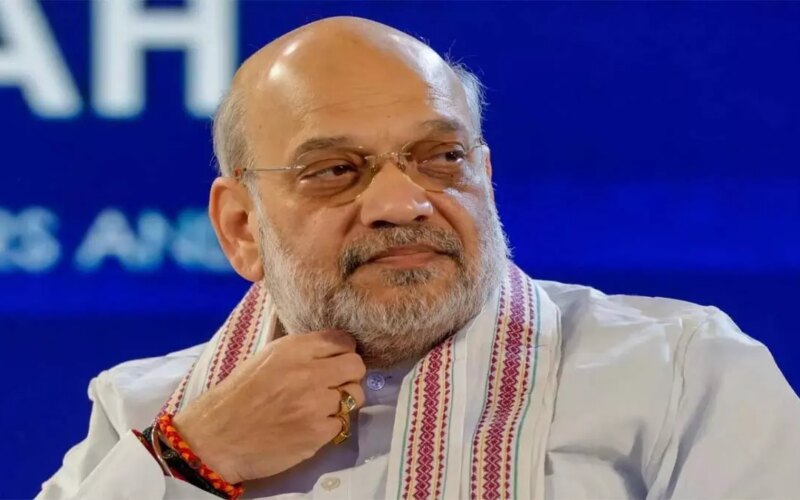
New Delhi (Rajeev Sharma): Union Home Minister Amit Shah on Thursday launched a major infrastructure drive worth Rs 8,941.22 crore aimed at preventing untreated sewage from flowing into the Yamuna, as the Delhi government steps up efforts to revive the polluted river.
The initiative covers 43 projects under the Delhi Jal Board, including the inauguration of 10 projects valued at Rs 2,827.11 crore and the laying of foundation stones for 33 others costing Rs 6,114.11 crore. The government has set a timeline of two to two-and-a-half years for completing the works, with the stated objective of ensuring that untreated wastewater from the capital no longer reaches the river through drains.
The projects were launched in the Najafgarh area and include new treatment facilities, upgrades to existing plants and an expansion of the city’s sewer network.
Okhla to get major sewage treatment facility
One of the biggest components of the package is a sewage treatment plant at Okhla with a capacity of 124 million gallons per day (MGD). The facility is estimated to cost Rs 1,161 crore and is expected to strengthen Delhi’s capacity to process wastewater before it enters the river system.
The plan also provides Rs 1,041 crore for upgrading eight existing sewage treatment plants. Their combined capacity is projected to rise from 78.2 MGD to 140.8 MGD, potentially improving sewage treatment services for around 78.5 lakh people.
In another major step, the government plans to build 29 decentralised sewage treatment plants and pumping stations across Outer Delhi at a cost of Rs 3,113.67 crore. These facilities are intended to address wastewater management in 358 unauthorised colonies and 113 villages, covering an estimated population of 36.29 lakh.
Smaller, locally distributed treatment facilities are particularly important in densely populated areas where land constraints make large treatment plants difficult to construct.
Sewer connectivity to expand across Delhi
Extending the sewer network is another key element of the initiative. A proposed 1,034-km network, estimated to cost Rs 1,691 crore, is expected to connect neighbourhoods that currently lack adequate sewage infrastructure.
The package also includes a 477-MLD water treatment plant at Chandrawal, with an estimated cost of ₹298.3 crore. The facility is expected to supply water to approximately 22 lakh people and replace infrastructure dating back to 1935 and 1955.
Additionally, a 4.5-km trunk drain will be constructed at Mundka at a projected cost of Rs 225.02 crore.
Together, these projects are intended to improve wastewater collection, treatment and water supply while reducing the volume of untreated sewage entering the Yamuna.
Government shifts focus from riverbank cleaning to sewage treatment
Delhi Water Minister Parvesh Sahib Singh Verma has argued that cleaning riverbanks and ghats alone cannot restore the Yamuna if untreated sewage continues to flow into it.
The government’s approach centres on improving the entire wastewater management chain, from household connections and sewer collection to treatment and the reuse of processed water.
The infrastructure announcement follows the October 18 ‘Chalo Yamuna’ campaign, which, according to the Delhi government, drew more than 35,000 participants across 70 locations. The drive resulted in the removal of 76,755 kg of dry waste and 9,850 kg of green waste and water hyacinth.
While such campaigns help remove visible waste, the government’s longer-term objective is to tackle the pollution entering the river through drains.
Residents urged to join the cleanliness drive
Alongside infrastructure development, the administration is seeking greater public involvement in keeping the river clean. Verma has urged residents to follow three key practices: dispose of household garbage
