

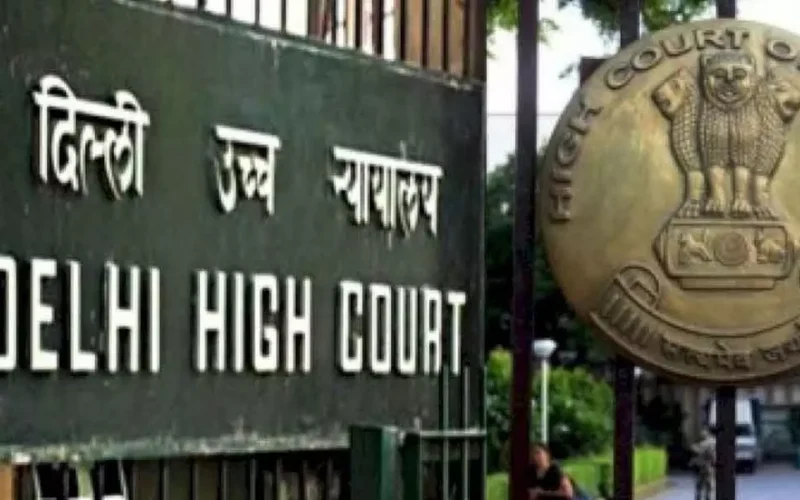
New Delhi (Gurpreet Singh): Former civil servant Ashish Joshi has approached the Delhi High Court challenging the large-scale deployment of Central Armed Police Forces (CAPFs) in the national capital for protest-related public order duties.
The Public Interest Litigation (PIL) seeks judicial scrutiny of the legal and administrative basis for deploying and repeatedly extending the presence of central forces in Delhi. It raises questions about the necessity, proportionality and duration of these deployments, particularly in the context of peaceful democratic protests.
In a post on X, Joshi said 301 CAPF companies were initially approved for deployment, with 273 companies extended until October 31, 2026. He further claimed that the deployment of 270 companies had been extended until November 16.
The petition argues that an order authorising the deployment of CAPFs in aid of civil power cannot, by itself, be treated as permission to disperse peaceful assemblies, detain people merely for participating in protests or use force.
What Has the PIL Sought From Delhi High Court?
Filed through advocates Ambuj Dixit and Amrish Ranjan Pandey, the petition seeks directions to the authorities to disclose details of the requisitions made by Delhi Police and the sanction and extension orders issued by the Union Ministry of Home Affairs (MHA).
It also seeks disclosure of reconciled, force-wise and date-wise deployment figures, including:
- The number of CAPF companies approved for deployment and their sanctioned strength.
- The number of personnel mobilised to Delhi and those who actually reported.
- The number of personnel assigned specifically to protest-related duties.
- Details of the operational impact on counter-insurgency operations, border security, election preparedness and disaster response.
The PIL has also sought the formulation of a written protocol governing substantial CAPF deployments for protest-related duties.
PIL Raises Questions Under Articles 14, 19 and 21
The petition raises constitutional questions under Articles 14, 19 and 21 of the Constitution, which deal with equality before the law, freedoms including peaceful assembly, and the protection of life and personal liberty.
It argues that every coercive action taken during such deployments must independently satisfy the constitutional and legal requirements of necessity, proportionality and accountability.
Joshi has also sought a direction that CAPF deployment should not continue beyond November 16 unless the authorities issue a written and reasoned order based on a fresh assessment of necessity and other safeguards.
The petition does not seek to establish that every deployment of central forces for maintaining public order is unlawful. Instead, it questions whether repeated extensions and the scale of deployment have adequate legal and administrative justification.
Why Have Protests Continued in Central Delhi?
Central Delhi has witnessed protests by opposition parties, student groups, civil society organisations and the Cockroach Janta Party (CJP) since June-July 2026.
The demonstrations have been held over several issues, including matters concerning the functioning of the Election Commission.
The PIL brings the deployment of central forces during these demonstrations under judicial scrutiny, with the petitioner seeking greater transparency over the government’s decisions and safeguards governing the use of CAPFs in protest-related situations.
