

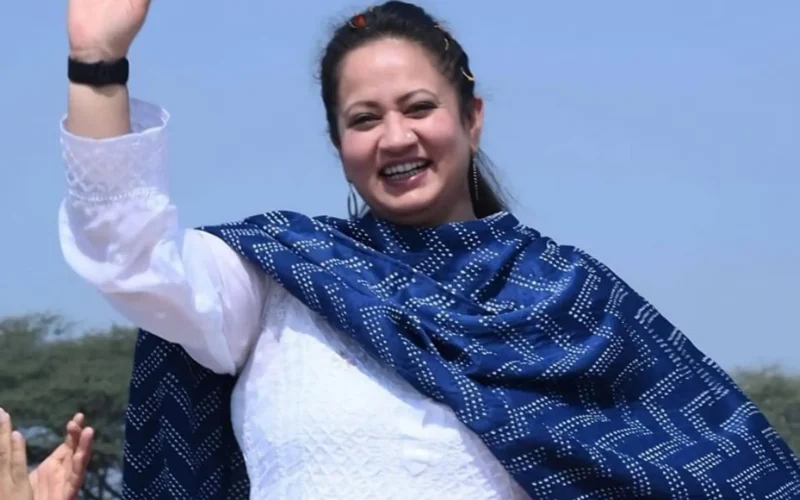
Chandigarh (Balwinder Singh): Haryana Health Minister Arti Singh Rao has announced that safeguarding child health remains the absolute top priority for the state government. Highlighting that both India and Haryana have maintained their coveted polio-free status since 2014, the minister attributed this monumental success to the collaborative efforts of the health department, frontline healthcare workers, and the general public. Making an earnest appeal to parents across the state, Rao urged families to ensure every child under the age of five receives the vaccine, instructing administrative officials to guarantee that no child is left outside this protective shield.
Reiterating its commitment to keeping Haryana entirely polio-free, the state administration formally launched the massive three-day Pulse Polio Campaign 2026 on Sunday, June 28, under the National Immunization Day initiative. The high-profile health drive witnessed widespread inauguration ceremonies across various districts, with senior ministers, legislators, deputy commissioners, and top bureaucrats leading booth-level operations. Haryana Assembly Deputy Speaker Dr. Krishan Lal Middha commenced the drive in Jind, while prominent lawmakers and former ministers, including Mool Chand Sharma in Faridabad, Jagmohan Anand in Karnal, and Subhash Sudha in Kurukshetra, administered the crucial drops to children at designated centers.
The extensive three-day immunization drive, scheduled to run from June 28 to June 30, 2026, aims to vaccinate approximately 35.50 lakh children across Haryana. Demonstrating an efficient rollout, the health department successfully covered over twenty lakh children—representing fifty-six percent of the total target population—on the very first day of the campaign. To facilitate seamless operations, the administration has set up roughly 17,000 vaccination booths staffed by over 34,000 healthcare teams comprising health workers, volunteers, Anganwadi staff, and ASHA workers. Furthermore, 1,500 mobile units have been specifically deployed to track down and vaccinate children residing in remote or highly vulnerable pockets, including brick kilns, active construction sites, poultry farms, and urban slum areas.
To maintain stringent quality control, the fieldwork is being heavily monitored by 3,400 field supervisors and senior district officers, alongside independent observers from the World Health Organization’s National Polio Surveillance Project. The state government has also appointed sixteen state observers to oversee operations, backed by an extensive public awareness campaign utilizing digital media, print platforms, and loudspeaker announcements. Health department officials confirmed that for the remaining two days of the drive, dedicated teams will conduct door-to-door visits to ensure complete coverage, specifically focusing on high-risk migrant populations to maintain the nation’s protective health shield intact.
