

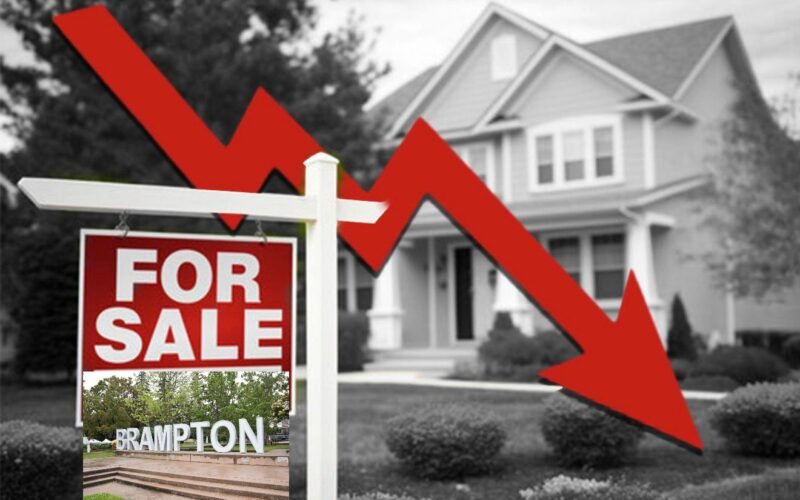
Brampton (Rajeev Sharma): Thousands of homeowners who invested heavily in the housing market during the pandemic are now facing severe financial pressure as rising mortgage costs and falling property values reshape the market. Many families who purchased large homes with basement suites, expecting strong rental income from international students, are now struggling to keep up with payments.
According to reports, Brampton has emerged as one of the highest home-selling cities in Ontario after Toronto. During the period of historically low interest rates, many buyers took on large mortgages believing rental income would comfortably cover expenses. However, changing economic conditions have turned those expectations upside down. Higher interest rates, tighter immigration policies, reduced international student numbers, and declining housing prices have created a difficult situation for many property owners. Market data suggests median home prices in Brampton have dropped nearly 34 percent since February 2022.
The impact is becoming increasingly visible through a sharp rise in “Power of Sale” listings across the city. Reports indicate that more than 100 such listings surfaced during the month of May alone. In one striking example, a property reportedly sold for $16.5 million in 2021 is now being resold for nearly $9 million, representing a massive financial loss for the owner. These developments are especially concerning for NRI and Punjabi families who purchased properties at peak pandemic prices with hopes of long-term financial growth and rental stability.

Speaking with National Times, mayoral candidate Jagruti Bhatt expressed deep concern over the growing financial crisis affecting homeowners in the city. She stated that many families entered the housing market during a period of uncertainty and were influenced by low interest rates and aggressive real estate speculation.
“Many hardworking families believed real estate would secure their future, but rising interest rates and changing economic conditions have placed enormous pressure on homeowners,” Bhatt said. “We need stronger financial awareness, responsible housing policies, and better long-term planning to protect residents from such situations in the future.” Bhatt also questioned whether enough support and practical solutions are being provided to struggling homeowners at the municipal level. She said residents expect leadership during difficult times and want stronger advocacy for housing affordability, mortgage relief discussions, and better coordination with provincial and federal governments. “People are looking for answers and support. Families are stressed, financially burdened, and worried about losing their homes. Leadership must actively work with all levels of government and financial institutions to find solutions instead of remaining silent,” she added.
While some analysts describe the situation as a “housing craze” correction, others believe the crisis is hitting highly leveraged investors and homeowners dependent on rental income the hardest. The changing market conditions are now raising broader concerns about financial sustainability, mortgage risks, and the future of Ontario’s overheated housing sector.
