

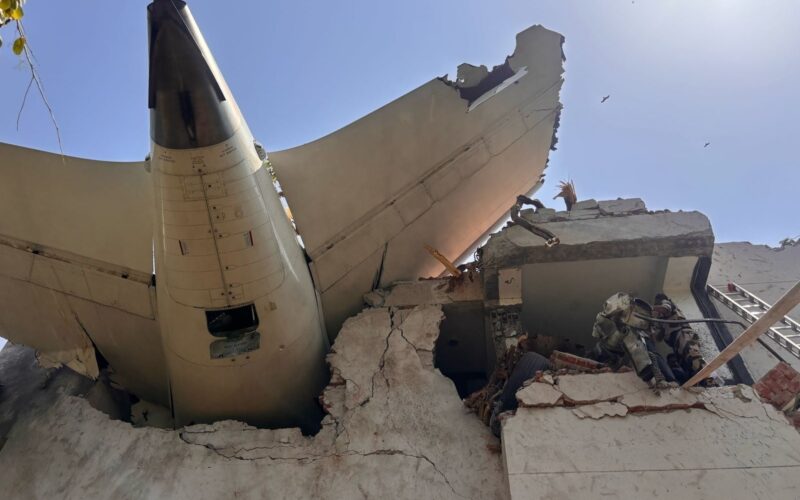
New Delhi (Rajeev Sharma): Questions are being raised over the handling of technical records linked to the Air India Boeing 787 involved in the Ahmedabad crash after a US-based aviation safety organisation alleged that investigators received extensive data highlighting repeated aircraft-system problems but have not made those findings public.
The Foundation for Aviation Safety says hundreds of records concerning Boeing 787 aircraft VT-ANB contain information about recurring issues involving electrical, electronic and flight-computer systems. The organisation argues that the material could help investigators reconstruct the aircraft’s condition and operating history before the June 2025 disaster.
The claims have not established that any of the reported technical problems caused the crash.
The Ahmedabad accident, involving Air India flight AI-171, killed 260 people in June 2025. The Aircraft Accident Investigation Bureau (AAIB) is conducting the investigation into the circumstances surrounding the crash.
The Foundation’s executive director, Ed Pierson, has questioned why the technical information was not reflected in the bureau’s publicly released investigation material and why no interim safety recommendation was issued in response to the alleged findings.
AAIB confirms receiving technical material
The AAIB has acknowledged that technical information provided by the Foundation reached the investigation team through a UK AAIB expert on June 10. The bureau said the material had been examined by members of the AI-171 investigation team.
The acknowledgement has become a key point in the Foundation’s criticism. Pierson argues that the issue is not simply whether investigators obtained the documents, but whether potentially important safety information has been adequately assessed and communicated.
The Foundation has particularly pointed to data generated through the aircraft’s Aircraft Communications Addressing and Reporting System (ACARS) and Aircraft Health Monitoring (AHM) systems. According to the organisation, these records may contain details about system faults and the timing of particular events before the crash.
Such information can potentially form part of a broader reconstruction of an aircraft’s condition, although its significance can only be determined through the full investigation and technical analysis.
Debate over interim safety action
Pierson has also questioned whether the material should have prompted an interim safety recommendation if investigators identified an immediate risk that could affect other aircraft.
The Foundation maintains that aviation investigators should assess safety implications as evidence emerges rather than wait exclusively for publication of a final accident report.
Its concerns extend to the amount of technical information that has appeared in public investigation documents. The organisation says the records it has identified were not acknowledged in the preliminary or subsequent interim reports.
The Foundation has therefore called for greater transparency about the technical evidence and has asked that the material be formally incorporated into the investigation record.
Investigation remains ongoing
The AAIB, however, has rejected suggestions that relevant evidence is being ignored. The bureau said the investigation is being conducted under India’s Aircraft (Investigation of Accidents and Incidents) Rules, 2025, as well as the standards set out in ICAO Annex 13.
It has maintained that relevant factual information and evidence are being examined as part of a fair and impartial investigation.
The dispute therefore centres on transparency and the timing of disclosure rather than establishing the cause of the crash. The technical records highlighted by the Foundation may become relevant to the investigation, but their presence alone does not demonstrate that aircraft-system failures were responsible for the accident.
As investigators continue their work, attention is likely to remain focused on how technical evidence is assessed, which findings can be independently established and whether any information warrants safety action before the final report is released.
