

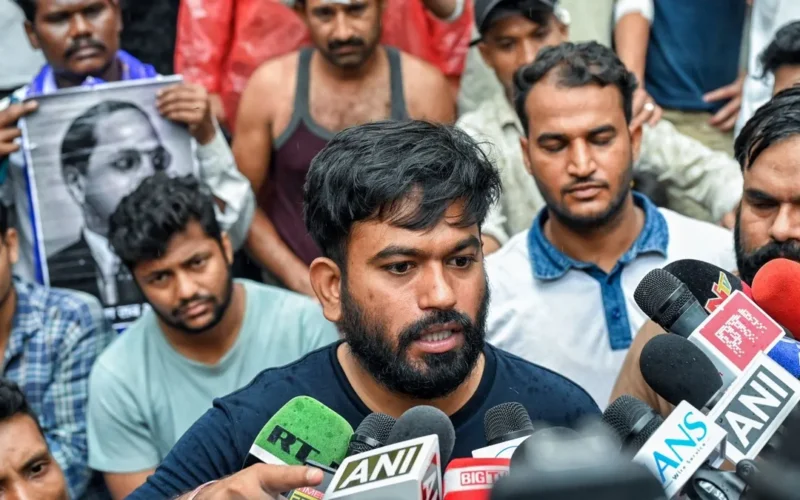
New Delhi (Rajeev Sharma): Cockroach Janata Party (CJP) founder Abhijeet Dipke has expressed gratitude to supporters across the country following the conclusion of the organisation’s 37-day protest over the alleged NEET-UG 2026 paper leak, saying the movement has only entered its next phase rather than coming to an end.
In a video message released after the protest was withdrawn, Dipke reflected on the emotional and physical toll of the month-long campaign, describing it as one of the most challenging periods of his life. He said the movement demanded constant planning, coordination and resilience from every member of the team.
For the first time in several weeks, Dipke said he was finally able to return home and rest without the pressure of planning the next day’s demonstrations, calling it a moment of relief after weeks of uncertainty.
The CJP leader credited students and volunteers from across India for keeping the campaign alive despite criticism and repeated challenges. He said the trust shown by thousands of supporters became the driving force behind what he described as a youth-led movement that captured national attention.
Dipke also apologised to those who had gathered at Jantar Mantar after the protest officially ended, explaining that he could not meet them because he was recovering from typhoid. He revealed that his health had deteriorated during the final stages of the agitation, forcing him to leave the protest site with a high fever.
Despite his illness, Dipke praised the dedication of volunteers who remained at the venue throughout the campaign, saying their commitment played a decisive role in sustaining the movement.
Interestingly, he also acknowledged those who questioned the organisation’s approach. According to Dipke, criticism helped CJP identify weaknesses, improve its strategy and remain accountable throughout the protest.
Looking ahead, Dipke asserted that the conclusion of the sit-in should not be seen as the end of the organisation’s efforts. Instead, he said the campaign had laid the foundation for a broader movement focused on education reforms and youth-related issues.
The protest concluded after the Centre held discussions with CJP representatives and accepted several demands linked to the examination controversy. The demonstrations also coincided with the resignation of Dharmendra Pradhan as Union Education Minister, a development that CJP described as a significant milestone.
During negotiations, the government reportedly agreed to examine proposals for strengthening the public examination system, consider financial assistance for families of NEET aspirants who allegedly died by suicide and review legal cases registered against peaceful protesters. Another round of talks is expected after a few weeks to assess progress on the proposed reforms.
The agitation gained further momentum when activist Sonam Wangchuk joined the campaign and undertook a 26-day hunger strike. After the government’s assurances, Wangchuk ended his fast and congratulated students for what he termed a democratic victory.
CJP leaders have maintained that while the protest at Jantar Mantar has concluded, the organisation will continue advocating for transparency in examinations, accountability in governance and policies aimed at protecting students’ interests across the country.
