

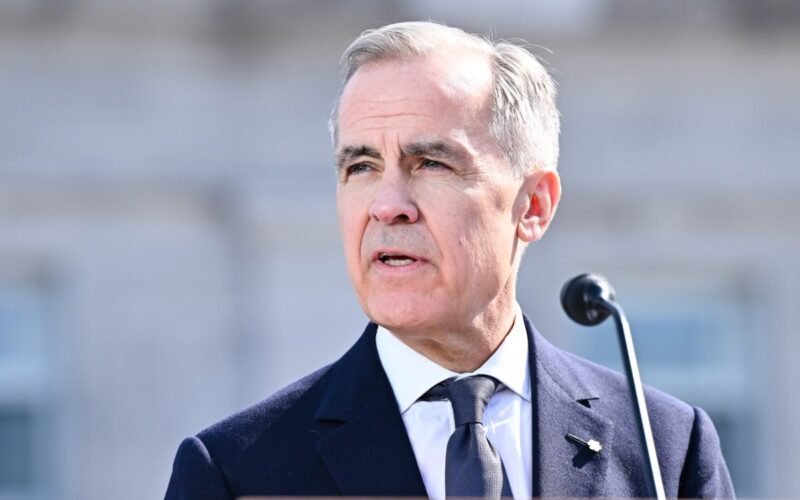
Ottawa (Rajeev Sharma): Canada has launched its first national security strategy in more than 20 years, with Prime Minister Mark Carney unveiling a new framework aimed at strengthening the country’s sovereignty, economic resilience, defence capabilities and intelligence systems amid growing global uncertainty.
Titled The Plan for a Stronger Canada, the strategy sets out five priorities covering economic security, foreign policy, the armed forces, public safety and intelligence. The Canadian government says the plan is intended to help the country respond to emerging threats, reduce vulnerabilities and build stronger partnerships with allies.
The announcement comes as Ottawa highlights growing challenges to national sovereignty, including cyberattacks, foreign interference and the use of trade relationships as instruments of pressure. The government argues that national security now extends beyond traditional military defence to include economic strength, resilient institutions and secure supply chains.
Carney said the strategy would strengthen Canada’s ability to protect its interests and shape its own future in an increasingly divided world.
What Are the Five Priorities of Canada’s New Security Strategy?
The plan brings together the government’s economic, diplomatic, military and domestic security policies under a single framework.
1. Strengthening economic security
Canada plans to invest in strategic industries, secure critical supply chains, improve energy security and support domestic innovation. The government says these measures will reduce economic vulnerabilities and strengthen the country’s position in key global industries.
2. Diversifying foreign policy partnerships
The strategy calls for broader trade relationships and deeper cooperation with like-minded countries. Ottawa says diversifying partnerships will help Canada strengthen its strategic autonomy and reduce its exposure to external pressures.
3. Rebuilding the Canadian Armed Forces
The government plans to strengthen the Canadian Armed Forces and the domestic defence industry, accelerate military procurement and improve Arctic security. The strategy also highlights Canada’s commitments to continental defence through NORAD and collective security through NATO, alongside its engagement in the Indo-Pacific and other regions.
4. Protecting Canadians and public institutions
The plan identifies foreign interference, espionage, violent extremism and transnational organised crime as key threats. It also calls for stronger action against activities such as fraud, extortion, money laundering, online exploitation, sabotage and sanctions evasion.
The government says it will work with provincial and territorial authorities, Indigenous Peoples and northern communities to improve public safety and protect democratic institutions from foreign information manipulation.
5. Modernising intelligence capabilities
Canada intends to strengthen its intelligence-gathering and analysis capabilities, expand cooperation with international partners and update its systems to address emerging threats and technological changes. The government says these efforts will continue to safeguard Canadians’ rights.
Canada Plans National Security Legislation Updates
As part of the strategy’s implementation, the federal government plans to bring forward proposals to modernise national security legislation within the first year of the plan.
Carney will also convene a First Ministers’ Meeting focused on national security, bringing together federal, provincial and territorial governments to improve coordination.
The strategy is expected to be reviewed and updated at least once every four years.
Budget 2025 Allocates $10.9 Billion for Digital Infrastructure
The government has highlighted a commitment of $10.9 billion over five years in Budget 2025 to upgrade digital infrastructure across the Department of National Defence, the Canadian Armed Forces and the Communications Security Establishment Canada.
According to the government, the investment will support secure and resilient digital systems and strengthen cyber-defence capabilities in response to a more complex threat environment.
Canadian Ministers Emphasise Defence and Economic Resilience
Defence Minister David J. McGuinty said the strategy brings together investments in the military, intelligence, economic security and critical infrastructure to strengthen Canada’s ability to defend its interests and contribute to collective defence.
Foreign Affairs Minister Anita Anand said the country needed stronger international partnerships to protect its sovereignty and advance its interests amid growing global uncertainty.
Public Safety Minister Gary Anandasangaree highlighted the need to safeguard democratic institutions and improve resilience against evolving threats. Industry Minister Mélanie Joly, meanwhile, emphasised strengthening strategic industries, protecting supply chains and improving the competitiveness of Canadian businesses.
The government has presented the strategy as a framework for coordinating its security priorities over the coming years, with a focus on protecting Canadians, strengthening domestic capabilities and maintaining cooperation with international allies.
