

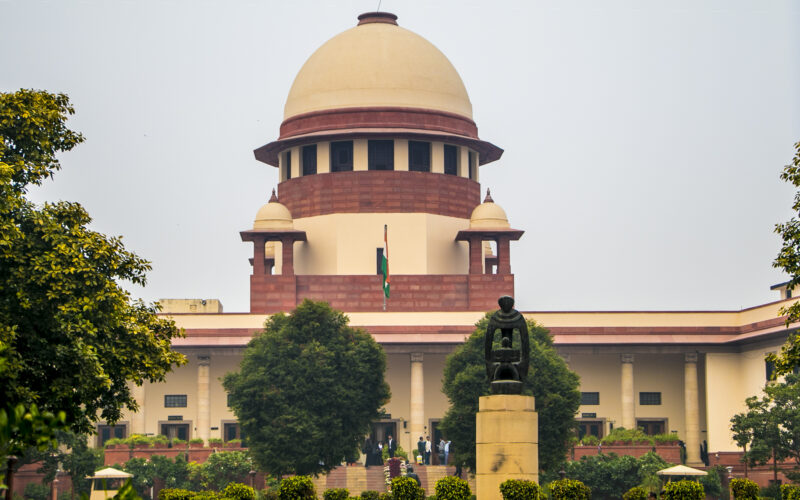
New Delhi (Rajeev Sharma): The Supreme Court on Tuesday decided to constitute a high-powered committee to investigate allegations of excessive police action during the CJP-led student protest and the march towards Parliament on July 20.
A three-judge Bench headed by Chief Justice of India Surya Kant said the proposed panel would include a retired Supreme Court judge, a former High Court Chief Justice, a former CBI Director, a former Director General of Police and other members. The court has sought suggestions from the parties on the composition of the committee and said its formal order would be issued on Wednesday.
The committee will examine video footage and CCTV recordings from the day of the protest, including visuals showing the confrontation between demonstrators and security personnel. The court also said complaints filed by women protesters alleging molestation would be considered by the panel.
The move comes against the backdrop of sharply differing accounts of the July 20 demonstration. While petitioners have alleged that police personnel used disproportionate force against students, the Delhi Police has rejected the charge and maintained that its response came only after repeated attempts to control the situation failed.
Solicitor General Tushar Mehta told the court that the protest was allegedly infiltrated by people with criminal backgrounds. According to the police, more than 240 personnel were injured during the disturbance.
Mehta said 92 people present at the protest site had been involved in more than 10 criminal cases, with 47 categorised as history-sheeters. He told the Bench that, apart from 2,873 individuals facing allegations involving serious offences such as murder, rape and abduction, cases against other protesters could be considered for quashing.
He also stressed that alleged anti-social elements who entered the protest should be identified and investigated separately.
The question of withdrawing criminal cases against student protesters triggered a separate round of arguments before the court. Advocate Rizwan Ahmed, appearing for a petitioner opposing the withdrawal of cases, argued that protesters should submit affidavits expressing remorse before receiving such relief. He maintained that the July 20 march was an unlawful gathering and that participants could not be automatically freed from legal consequences.
Several senior advocates appearing for the protesters opposed the argument. Menaka Guruswamy, Gopal Sankaranarayanan, N Hariharan and Shadan Farasat, along with advocate Vrinda Grover, argued against imposing such a condition.
Sankaranarayanan drew attention to the Delhi Police affidavit, claiming that it acknowledged the presence of personnel in plain clothes who were allegedly not wearing identification tags while using force.
The Bench, meanwhile, underlined the possible consequences of criminal proceedings on young students. Chief Justice Surya Kant observed that the cases could affect their education, careers and broader future, while also pointing to the constitutional protection available for peaceful expression under Article 19.
The CJI said the alleged criminal conduct needed to be assessed in the context of why the students had gathered. He stressed that peaceful protesters exercising their right to raise their voice should not automatically be equated with habitual or hardened offenders.
The Delhi Police has maintained that its personnel resorted to force only after protesters ignored repeated warnings and continued attempting to move towards Parliament. In its affidavit, Deputy Commissioner of Police Sachin Sharma said the force was willing to subject its conduct to scrutiny by a committee appointed by the Supreme Court and would provide all relevant material.
The proposed panel is now expected to independently examine the available footage, the police response, allegations made by protesters and the circumstances surrounding the violence. Its recommendations could help the Supreme Court determine how the cases against the protesters should be dealt with and whether any action is warranted over allegations of police excesses.
The proceedings have brought renewed attention to the difficult balance between maintaining public order and protecting the constitutional right of citizens, particularly students, to protest peacefully.
