

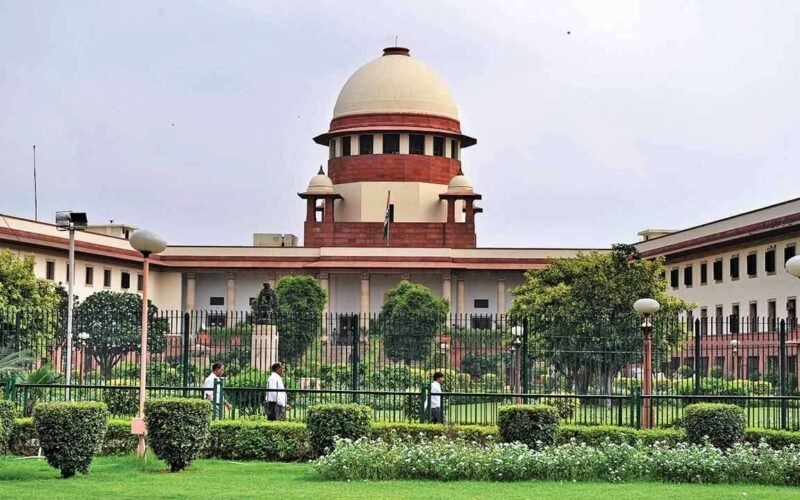
New Delhi (Gurpreet Singh): Senior advocate and amicus curiae Vijay Hansaria has urged the Supreme Court to mandate the issuance of non-bailable arrest warrants against politicians facing criminal trials who fail to appear before designated courts for two consecutive hearings. The recommendations were submitted in a 96-page comprehensive report as part of ongoing proceedings in a public interest litigation seeking the speedy disposal of criminal cases against sitting and former Members of Parliament and Members of Legislative Assemblies.
The report highlighted that designated Special Courts for MPs and MLAs must conduct trials exclusively for lawmakers, directing that regular trial work should be assigned by Principal District and Sessions Judges only after pending cases against elected representatives are formally concluded. Despite continuous judicial oversight by the top court and various high courts since 2018, the volume of pending criminal cases against politicians remains largely unchanged, with 4,192 criminal cases pending across India. Data compiled from high courts revealed that while 1,243 criminal cases involving lawmakers were resolved in 2025, an additional 1,050 fresh cases were instituted during the same period.
According to data compiled by the Association for Democratic Reforms and presented in the affidavit through advocate Sneha Kalita, 251 out of 543 members in the Lok Sabha face criminal charges, with 170 members facing serious charges punishable by imprisonment of five years or more. In the Rajya Sabha, 75 out of 233 lawmakers have criminal cases against them, including 40 facing serious charges. Furthermore, chief ministers across 14 of the country’s 28 states have declared criminal cases against themselves.
State-wise breakdowns show that Kerala has the highest proportion of members with pending cases, with 19 of its 20 parliamentarians facing criminal charges, followed by Telangana with 14 out of 17 lawmakers, Odisha with 16 out of 21, and Jharkhand with 10 out of 14. In contrast, several states recorded significantly lower proportions, including Haryana and Chhattisgarh with only one parliamentarian each facing charges, while Punjab recorded two out of 13 and Delhi three out of seven. The matter is scheduled for further hearing before the top court.
