

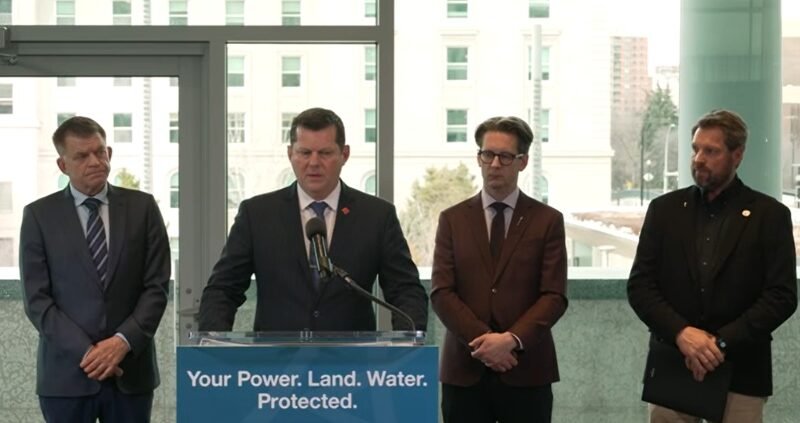
Calgary (Rajeev Sharma): The Alberta government is proposing tighter regulations for data centre developments, with new measures aimed at protecting residential communities, agricultural land, water resources and electricity affordability. The proposed changes are part of Bill 42, the *Energy, Environment and Utilities Statutes Amendment Act, 2026*, which seeks to establish clearer conditions for data centre expansion while supporting investment in the province’s technology sector.
Under the proposed legislation, data centres with a capacity of 10 megawatts or more would have to maintain a minimum distance of 600 metres from the nearest residence. Such facilities would also face restrictions on development over high-quality agricultural land, including approximately 14 million acres of Class 1 and Class 2 farmland, as well as Class 3 land in municipalities without the higher classifications. Large data centres would also be prohibited from being built on irrigated land. Municipalities could establish alternative setback requirements in certain circumstances where local planning supports compatible development.
The legislation also proposes stricter water management standards, with the government aiming to bring cooling-related water consumption at data centres close to zero through a provincewide standard. Developers would additionally be required to design and operate facilities in ways that allow excess heat to be recovered and potentially reused by greenhouses, industrial operations and residential buildings. Existing noise regulations would remain in place, while corporate offenders responsible for serious environmental contamination could face maximum fines of up to $6 million, alongside existing cleanup and remediation requirements.
Technology and Innovation Minister Nate Glubish said the proposed framework reflects concerns raised by Albertans about protecting their communities, farmland and water. He said the government wants to encourage artificial intelligence infrastructure investment while ensuring development takes place under clearly defined environmental and community safeguards.
Affordability and Utilities Minister RJ Sigurdson said electricity reliability and affordable power for residents would remain central to the province’s approach. He added that the proposed measures would strengthen existing protections while creating conditions for sustainable growth across Alberta’s electricity sector.
**Electricity costs and grid reliability**
Bill 42 would introduce a new Data Centre Designation to ensure that companies developing large facilities bear the costs of the electricity infrastructure required for their projects. The proposed framework is intended to prevent these expenses from being transferred to ordinary electricity consumers.
Data centre operators would also continue to face requirements demonstrating that their projects would not threaten grid reliability. During electricity emergencies, these facilities would be required to reduce their consumption before restrictions are imposed on households or essential services.
The legislation also proposes measures to address disproportionately high electricity distribution charges affecting some Alberta residents. In addition, the Balancing Pool would be renamed the Alberta Utilities Trust to better reflect its role in supporting utility affordability.
**Stronger penalties for illegal dumping**
The proposed legislation would also increase penalties for illegal dumping through amendments to the *Environmental Protection and Enhancement Act*. Individual offenders could face fines ranging from $10,000 to $100,000, while penalties for corporations could reach between $100,000 and $1 million. Courts would also be empowered to impose jail sentences ranging from 30 days to six months.
**New financial requirements for oil and gas well cleanup**
Another major component of Bill 42 involves requiring energy companies to establish financial security for the eventual closure and reclamation of newly drilled oil and gas wells. The proposed Resource Asset Closure Assurance and Stewardship Fund would link cleanup funding directly to individual wells, ensuring that resources are available when they stop producing.
The measure is part of Alberta’s broader Mature Asset Strategy and is intended to prevent newly drilled wells from becoming unfunded liabilities for the Orphan Well Association.
**Changes to energy tenure and forestry regulations**
Bill 42 would introduce technical amendments to the *Mines and Minerals Act* to simplify and clarify agreements governing Alberta’s Crown energy resources. The legislation would also expand the definition of natural gas to include gases such as helium and hydrogen.
Changes to forestry regulations would provide the government with additional tools to coordinate sustainable forest management across larger areas. The proposed amendments would also revise the process for transferring timber harvesting rights, allowing authorities to consider local employment and community requirements. The minister would further receive the power to update the list of timber products to clarify the fees applicable to newly developed products.
**Repeal of unused oil sands emissions legislation**
The government is also proposing to repeal the *Oil Sands Emissions Limit Act*, introduced in 2016 but never implemented. Alberta says emissions from the oil and gas sector are already regulated through the Technology Innovation and Emissions Reduction (TIER) system, which is intended to encourage emissions reductions alongside investment and technological development.
According to the government, removing the redundant legislation would not affect existing environmental assessment procedures or eliminate federal environmental review requirements.
The proposed changes have received responses from municipal representatives, agricultural organisations and industry stakeholders, with several highlighting the importance of balancing infrastructure investment with protections for communities, farmland, water resources and electricity consumers. If passed, Bill 42 would introduce changes across multiple areas of Alberta’s energy, environmental and utility regulatory framework.
