

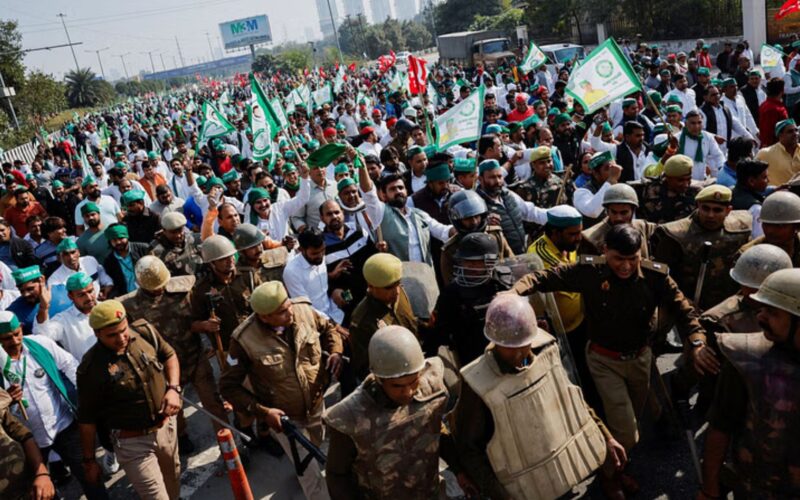
Chandigarh (Gurpreet Singh): A fresh round of protests by farmer organisations witnessed heightened security and police action on Tuesday as authorities blocked key routes leading to Delhi. The Shambhu border, connecting Punjab and Haryana, remained heavily barricaded while several farmers travelling from different parts of Haryana were taken into preventive custody before they could join the planned gathering in the national capital.
The protesters had announced a march to Delhi to participate in a ‘Mahapanchayat’ at Kisan Ghat, where they intended to voice their opposition to the proposed India–US trade agreement. Anticipating large gatherings, the Haryana administration strengthened security at border checkpoints and deployed additional police personnel to regulate movement.
Multiple barricades were installed along the Shambhu crossing, forcing authorities to divert traffic and causing congestion on nearby highways. Commuters travelling between Punjab and Haryana experienced delays as police restricted movement in the area.
Farmer leaders criticised the administration’s decision, alleging that the restrictions were imposed to prevent them from exercising their democratic right to protest. They claimed that many protesters were stopped before reaching Delhi, while others remained stranded near the interstate border due to the road closures.
In a separate development, police in Kurukshetra detained a group of farmers travelling by bus towards the capital. The protesters were reportedly shifted to a police facility as a preventive measure. Farmer representatives described the detentions as unjustified and said they would continue their agitation through peaceful means.
At the heart of the protest is the proposed India–US trade agreement, which farmer unions argue could expose Indian agriculture to unfair competition. They contend that American farmers benefit from large-scale mechanised farming and substantial government support, whereas the majority of Indian cultivators operate on small landholdings with comparatively limited financial assistance.
According to the unions, allowing cheaper imported farm produce into the domestic market could significantly reduce earnings for small and marginal farmers, affecting rural livelihoods across the country.
Despite the restrictions and detentions, farmer organisations indicated that their campaign against the proposed trade pact would continue, with further demonstrations and consultations expected in the coming days. Authorities, meanwhile, appealed for peace and urged the public to follow traffic advisories issued for the affected routes.
