

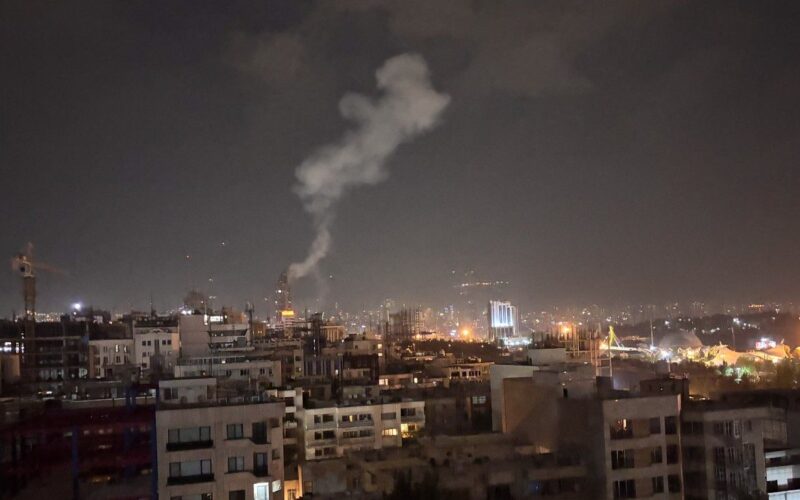
New Delhi (Rajeev Sharma): The confrontation between the United States and Iran intensified dramatically as American forces launched another round of airstrikes for the seventh consecutive night, prompting Tehran to warn that the conflict could spread beyond its borders if the attacks continue.
The US Central Command (CENTCOM) said the latest operations were aimed at weakening Iran’s military capabilities and reducing its ability to conduct offensive operations. While Washington maintained that its strikes targeted military infrastructure, Iranian officials accused the US of hitting civilian facilities, including transportation hubs and public infrastructure.
Reacting sharply, senior Iranian military adviser Major General Mohsen Rezaei declared that Iran would abandon its strategy of proportional retaliation if the air campaign persisted. He warned that future military action would not be restricted to direct responses and suggested that the conflict could extend across the wider region.
Iran’s Revolutionary Guard Corps (IRGC) also announced that missile and drone operations targeting American military interests would continue until the United States ceased attacks on Iranian territory, particularly in southern coastal regions and around the Strait of Hormuz.
The latest escalation has widened the conflict across West Asia. Iranian authorities claimed responsibility for attacks aimed at American military assets in several Gulf nations, including Qatar, Bahrain, Kuwait and Oman. Air defence systems in multiple countries were activated as missiles and drones were intercepted, while regional governments heightened security around key military installations.
The impact of the conflict has also been felt at sea. Maritime security agencies reported fresh threats to commercial shipping near the Strait of Hormuz, one of the world’s busiest oil transit routes. Industry observers warned that continued instability in the region could affect global energy markets and international trade.
Inside Iran, authorities said recent strikes had placed additional pressure on essential services. The government appealed to citizens to reduce electricity consumption after damage to energy-related infrastructure reportedly strained the country’s power supply.
According to Iranian officials, casualties have continued to rise since the latest phase of hostilities began, with dozens reported dead and hundreds injured. Emergency services remain on high alert as rescue operations continue in affected areas.
The renewed violence has triggered fresh diplomatic concern. United Nations Secretary-General António Guterres condemned attacks on civilian infrastructure and urged both sides to prevent further escalation. Several countries, including China and Pakistan, have also appealed for an immediate return to dialogue, warning that prolonged fighting could destabilise the broader Middle East.
Despite international calls for restraint, neither Washington nor Tehran has indicated any immediate willingness to scale back military operations, raising fears that the conflict could enter an even more dangerous phase in the coming days.
