

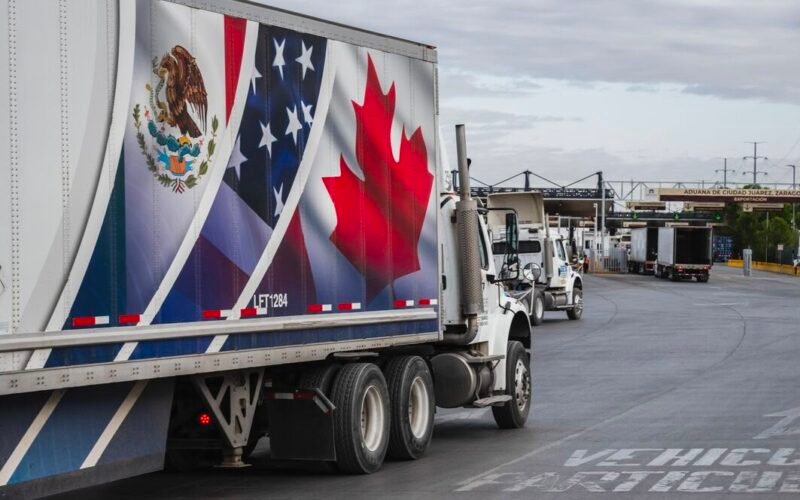
Calgary (Rajeev Sharma): North America’s economic partnership has entered a decisive phase as Canada, the United States and Mexico begin the first mandatory six-year review of the United States–Mexico–Canada Agreement (USMCA). The review, which officially commenced on July 1, is widely viewed as one of the most consequential trade negotiations since the agreement replaced NAFTA in 2020. Governments and businesses across the continent are closely watching the outcome, which could reshape the future of regional trade and investment.
The review has gained heightened attention after the Trump administration signaled that it does not intend to offer an automatic extension of the agreement. Instead, Washington is pushing for significant changes, including stricter automotive rules of origin, stronger measures to prevent Chinese goods from entering North American markets through Canada or Mexico, and broader reforms aimed at strengthening U.S. manufacturing competitiveness.
Canada and the United States also remain divided over several longstanding trade disputes. Washington continues to challenge Canada’s dairy supply management system, digital services policies, government procurement practices and other regulatory measures, while Ottawa has maintained that key domestic policies, particularly supply management, remain fundamental to protecting Canadian producers and consumers. Although the USMCA remains fully in force, the review process introduces a new level of uncertainty for businesses operating across North America. Under the agreement’s “sunset clause,” the three countries must jointly decide whether to extend the pact. If consensus is not reached, the agreement will continue to operate but will face annual reviews and could expire in 2036, unless all three governments agree to renew it before then.
Industry leaders warn that prolonged uncertainty could affect billions of dollars in cross-border investment and disrupt integrated supply chains in sectors such as automotive manufacturing, agriculture, energy, steel, aluminum and advanced manufacturing. Companies that rely on seamless trade between the three countries are urging governments to provide stability and preserve the competitiveness of the North American economy. The United States, Canada and Mexico together represent one of the world’s largest trading blocs, with trillions of dollars in annual trade supporting millions of jobs across the continent. The outcome of the USMCA review is therefore expected to have far-reaching implications not only for governments and businesses but also for workers, consumers and investors.
Negotiations are expected to continue over the coming months, with trade experts predicting difficult discussions before any consensus is reached. While there is no immediate risk of the agreement ending, the review marks a critical test of North America’s commitment to economic cooperation at a time of increasing geopolitical competition and shifting global supply chains.
