

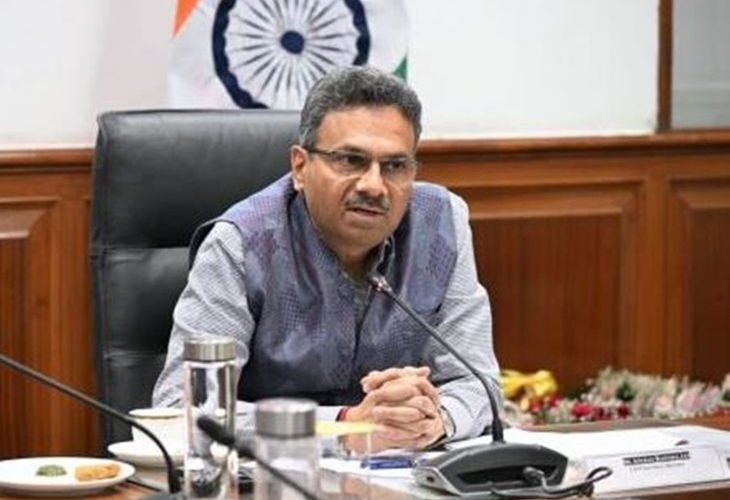
Chandigarh (Balwinder Singh): The Haryana government has initiated a comprehensive structural overhaul of its administrative appraisal framework by deciding to permanently phase out the traditional manual Annual Confidential Report (ACR) system. Under a sweeping directive issued by Chief Secretary Anurag Rastogi, the state will transition entirely to an integrated Digital Performance Monitoring System starting April 2027. The administrative reform mandate has been circulated to all administrative secretaries, departmental heads, public sector boards, corporations, universities, and district commissioners to ensure immediate operational compliance across all tiers of governance.
The structural transition aims to replace subjective performance tracking with an objective, data-driven, and outcome-oriented evaluation methodology. Under the newly designed guidelines, individual government departments will draft customized digital ACR templates where an employee’s core assignments, quantifiable milestones, and operational output will be documented on a measurable matrix. To systematically eliminate bureaucratic delays, the Chief Secretary’s office has directed all state departments to urgently compile detailed registries pinpointing the specific nodal officers and desks holding the highest volume of backlogged, pending ACR files. This data will be used to enforce absolute time-bound transparency and fix internal accountability.
Technically engineered by the National Informatics Centre (NIC) alongside designated software development teams, the upcoming online evaluation module will be directly synchronized with the state’s existing Human Resource Management System (HRMS) portal. This integration will facilitate real-time monitoring, allowing supervisors to assess workspace productivity dynamically rather than relying on delayed year-end submissions. Furthermore, a permanent, public-facing “Honor Board” will be launched on the Chief Secretary’s official website to publish institutional performance-based rankings of personnel across state, district, and block levels. By displaying verified lists of both top-tier achievers and underperforming staff based on standardized metric scores, the state administration expects to significantly maximize public transparency, curb institutional inertia, and foster a healthy competitive work culture across the civil services.
