

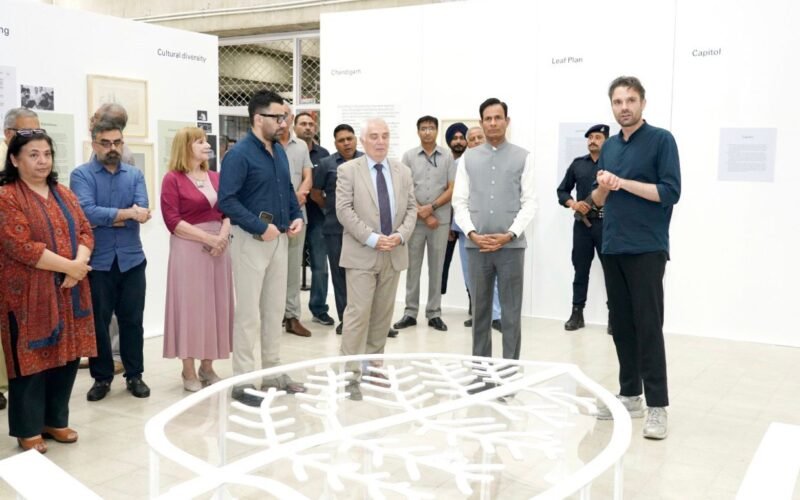
Chandigarh (Naval Kishore): Chandigarh witnessed the inauguration of the exhibition “Humanist Modernity: The Unbuilt Chandigarh of Maciej Nowicki” at the Government Museum and Art Gallery on May 12, 2026. The exhibition was inaugurated by H. Rajesh Prasad in the presence of Dr. Piotr Antoni Świtalski, along with senior officials, architects, and distinguished guests from Poland and India. Organised jointly by the Government Museum and Art Gallery, the Polish Institute, and the National Institute of Architecture and Urban Planning, the exhibition celebrates the visionary work of renowned Polish architect Maciej Nowicki, who contributed to the early planning of Chandigarh alongside American planner Albert Mayer in 1949.
A documentary film showcasing Nowicki’s vision for Chandigarh was screened during the event, followed by a live musical performance by Polish singer Michal Rudas. Addressing the gathering, Chief Secretary H. Rajesh Prasad said Chandigarh takes pride in hosting an exhibition dedicated to one of the greatest architects of his era. He noted that although Nowicki’s untimely death prevented him from completing his vision for Chandigarh, elements of his ideas can still be seen in the city’s planning and in the work of Le Corbusier. He also stressed the collective responsibility of citizens to preserve the heritage and architectural identity of “The City Beautiful.”
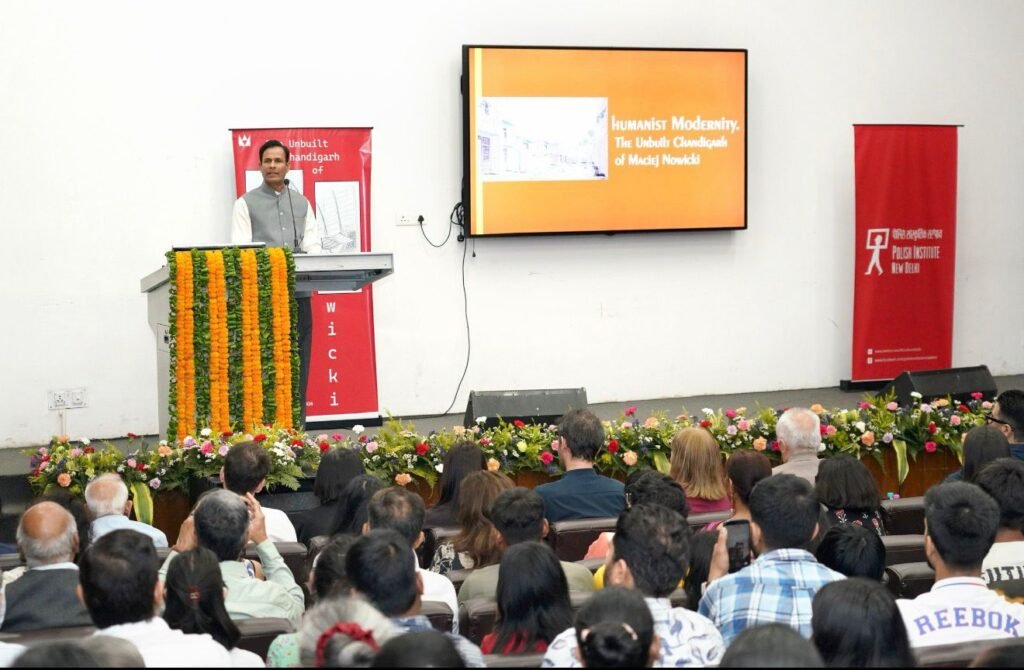
Dr. Piotr Antoni Świtalski highlighted that Nowicki’s architecture reflected deep human values, environmental sensitivity, and cultural understanding. He added that the architect’s ideas continue to inspire generations of architects and urban planners around the world. The exhibition features original drawings, master plans, archival documents, and rare material showcasing Nowicki’s human-centric urban vision focused on green spaces, climate-sensitive planning, and community-oriented design. It also highlights his international contributions, including involvement in the design process of the United Nations Headquarters and the iconic Dorton Arena.
The exhibition will remain open to the public until July 15, 2026, from 10:00 AM to 4:30 PM. The museum will remain closed on Mondays and gazetted holidays.
