

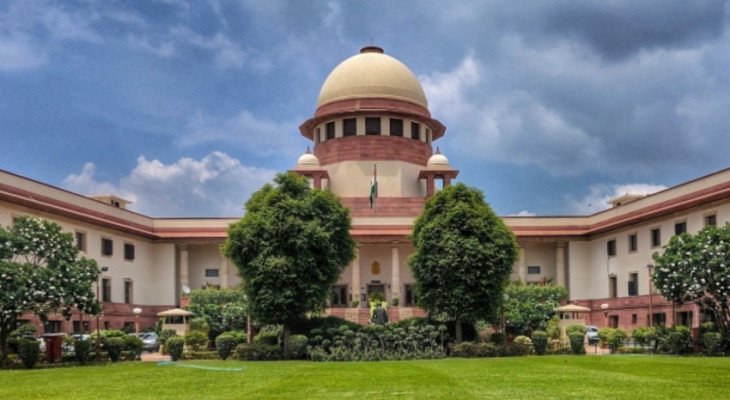
New Delhi (Gurpreet Singh): The Supreme Court of India is scheduled to hear a Public Interest Litigation on Monday that seeks to fundamentally alter the issuance of Aadhaar numbers to prevent potential misuse by illegal infiltrators. The petition, filed by advocate Ashwini Upadhyay, is listed before a bench comprising Chief Justice of India Surya Kant and Justice Joymalya Bagchi on May 4. The petitioner has requested the court to direct the Unique Identification Authority of India to restrict the issuance of new Aadhaar numbers primarily to children up to the age of six years, while implementing significantly more stringent guidelines for any adolescents or adults seeking enrolment.
According to the petition, the current Aadhaar framework has become increasingly vulnerable due to weak and easily manipulated verification processes. Upadhyay contends that the existing system allows illegal infiltrators to obtain the 12-digit identification number and subsequently secure other foundational documents such as ration cards, domicile certificates, and voter IDs. This process, the petition alleges, allows non-citizens to pass themselves off as Indian residents, leading to the diversion of public resources and a direct threat to national security and electoral integrity. The petitioner argues that because over 144 crore Aadhaar numbers have already been generated, restricting new enrolments to children—who are unlikely to be infiltrators—would protect the interests of genuine citizens.
The PIL further urges the top court to mandate the installation of display boards at all common service centres to clarify that Aadhaar is merely a proof of identity and not a proof of citizenship, address, or date of birth. Upadhyay has also demanded that all adult applicants be required to furnish a mandatory undertaking affirming the correctness of their information, with harsh penalties for false declarations. He suggested that any adult seeking an Aadhaar number should undergo a rigorous background verification process conducted by authorities such as a Sub-Divisional Magistrate or a Tehsildar to ensure the system’s foundational integrity.
The legal challenge emphasizes that the lack of differentiation between citizens and non-citizens within the Aadhaar database results in the misuse of government subsidies and defeats the objective of targeted welfare delivery. This, the petitioner claims, constitutes a violation of fundamental rights guaranteed under Articles 14, 19, and 21 of the Constitution. The case has named several parties including the UIDAI, all states and union territories, and the Union Ministries of Home Affairs, Law and Justice, and Electronics and Information Technology, as the court prepares to deliberate on the implications for national security and constitutional fairness.
