

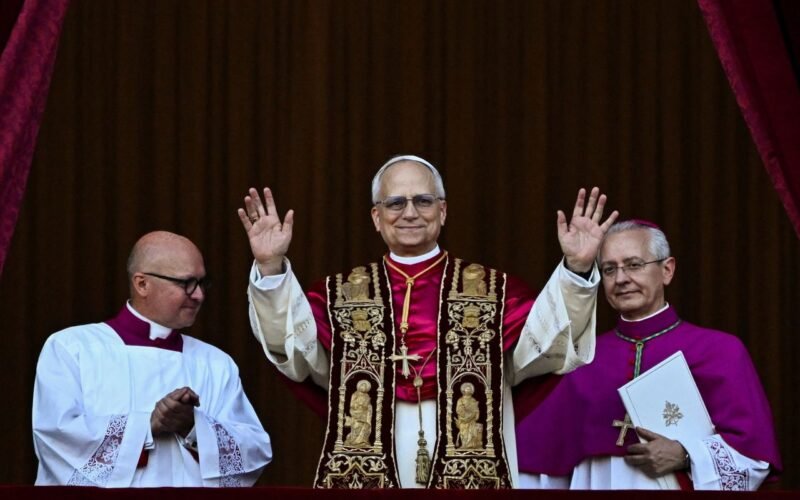
Vatican City (International News Desk): In his first Easter Sunday message as pontiff, Pope Leo XIV called upon world leaders and combatants to lay down their weapons and pursue peace through dialogue rather than force. Addressing approximately 50,000 faithful in St. Peter’s Square, the U.S.-born Pope emphasized the transformative power of love and the necessity of “encounter” over the desire to dominate. While his Christmas message had explicitly detailed global conflicts, this Easter the Pope notably departed from tradition by omitting a specific litany of the world’s woes during his Urbi et Orbi blessing, instead focusing on a broader appeal for humanity to overcome the “idolatry of profit” and the “indifference” that fuels modern warfare.
The backdrop of the Pope’s message remains grim, with the military conflict between the U.S.-Israeli coalition and Iran entering its second month alongside the protracted war in Ukraine. Without naming the specific combatants, Leo XIV quoted his predecessor, Pope Francis—who passed away on Easter Monday last year—reminding the world of the daily “thirst for death” witnessed across the globe. To address this crisis of violence, the 70-year-old pontiff announced a special prayer vigil for peace to be held at St. Peter’s Basilica on April 11. He implored the global community to abandon the pursuit of power that crushes the weakest members of society and plunders the earth’s natural resources.
The new papacy has already signaled several shifts in Vatican tradition. Pope Leo XIV revived the practice of greeting the faithful in ten different languages, including Arabic and Chinese, a custom his predecessor had moved away from. During Holy Week, he also returned to the tradition of washing the feet of priests on Holy Thursday and demonstrated significant physical stamina by personally carrying the wooden cross through all 14 stations during the Good Friday procession. These gestures are seen by many as an effort to provide encouragement to the clergy while maintaining a rigorous commitment to the traditional liturgical rites of the office.
Meanwhile, Easter celebrations across the Middle East remained heavily subdued. In Jerusalem, Israeli police restricted the scale of ceremonies at the Church of the Holy Sepulchre due to ongoing missile threats, mirroring similar limitations placed on Ramadan and Passover observances. Conversely, in Tehran, Armenian Christians gathered at St. Sarkis Cathedral to mark the holiday amidst daily airstrikes, attempting to provide a sense of normalcy for their children. Archbishop Sepuh Sargsyan of the Armenian Diocese of Tehran echoed the Pope’s sentiments, calling for those who started the war to look toward the heavens for mutual respect and a path toward ending the bloodshed.
