

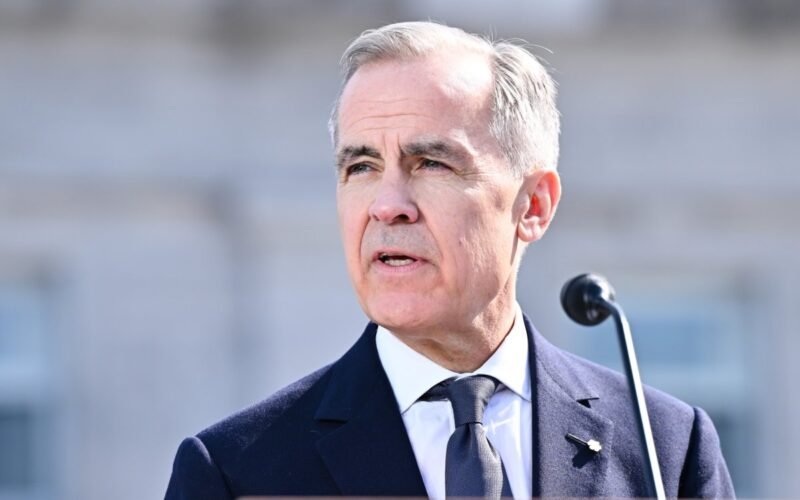
Ottawa (Rajeev Sharma)— Mark Carney’s ambitious framework for a global net-zero financial transition is facing a critical stress test as Canada’s leading oil and gas companies signal a renewed push to expand production. According to a report by Reuters, the collision between long-term climate mandates and immediate energy security concerns has reached a boiling point, with Canadian producers arguing that their crude is essential to stabilizing global markets amid ongoing supply disruptions in West Asia. Carney, the UN Special Envoy on Climate Action and Finance, has long advocated for a managed phase-out of fossil fuel investment, but that vision is now being challenged by the reality of a world starved for reliable energy alternatives.
Major industry players, including Canadian Natural Resources Ltd and Suncor Energy, have emphasized that the current geopolitical climate—specifically the blockade of the Strait of Hormuz—necessitates a boost in North American output to prevent a global economic shock. These companies contend that Canadian oil, produced under increasingly stringent environmental regulations, represents a “lower-risk” alternative to supplies coming from volatile conflict zones. However, Carney’s climate plan relies on financial institutions redirecting capital toward renewable energy and away from any new oil and gas exploration, a strategy that critics in Calgary now describe as “detached from the physical realities of the market.”
The friction between the financial sector’s “green” mandates and the energy sector’s production goals has created a sense of uncertainty for investors. While Carney has warned that over-investing in fossil fuels risks creating billions of dollars in “stranded assets” as the world eventually pivots to electricity, oil executives argue that the transition will take decades longer than current financial models suggest. They point to the fact that demand for heavy crude remains at near-record highs, and that without increased Canadian production, global energy prices will continue to fuel inflation and instability across the Western world.
Political tensions in Ottawa are also rising as the federal government attempts to balance its international climate commitments with the economic windfall of high oil prices. While some officials remain steadfast in supporting Carney’s transition timeline, others are quietly acknowledging that Canada’s role as a major energy exporter provides the country with significant diplomatic and economic leverage during the current Middle East crisis. The outcome of this debate is expected to have a profound impact on the upcoming federal budget and the future of the nation’s emissions cap, which the industry is now lobbying to have relaxed in the name of continental energy security.
As the standoff continues, the global financial community is watching closely to see if Carney can maintain the integrity of his net-zero alliance. If one of the world’s most stable energy producers successfully argues for continued expansion, it could set a precedent that other resource-rich nations will likely follow, potentially derailing the timelines established under the Paris Agreement. For now, the Canadian oil sands remain a focal point in the global struggle to define what an “orderly transition” actually looks like in a world where energy security has once again become a top-tier national priority.
